Things to Do in Dingle Ireland
Dingle is the kind of Irish destination that rewards curiosity. Tucked into County Kerry on the spectacular Dingle Peninsula, this colorful harbor town combines dramatic Atlantic scenery, ancient stone monuments, lively traditional music, excellent seafood, and a warm local character that makes it easy to slow down and stay awhile. If you’re searching for the best things to do in Dingle Ireland, you’ll find far more than a quick sightseeing stop.
The real magic begins when you leave the town and explore the wider peninsula. Drive the legendary Slea Head route, discover remote beaches, look across to the Blasket Islands, visit ancient Gallarus Oratory, climb Conor Pass, or simply find a cozy pub where traditional Irish music fills the room. Dingle is also a wonderful base for families, couples, solo travelers, photographers, hikers, and road-trippers exploring Ireland’s Wild Atlantic Way.
If you have only one day, prioritize Dingle town, Slea Head Drive, Coumeenoole Beach, Dunquin Pier, and one traditional music session. With two or three days, add the Blasket Centre or Great Blasket Island, Gallarus Oratory, Conor Pass, a boat trip, and a proper taste of Dingle’s food scene.
Table of Contents
- Why Visit Dingle Ireland?
- Best Things to Do in Dingle Ireland
- Explore Dingle Town on Foot
- Drive the Slea Head Route
- Visit Coumeenoole Beach
- See Dunquin Pier and the Blasket Islands
- Visit the Blasket Centre
- Explore Gallarus Oratory
- Discover Dún Beag Fort and Ancient Sites
- Drive Over Conor Pass
- Enjoy a Dingle Boat Tour
- Visit Dingle Oceanworld Aquarium
- Taste Irish Whiskey at Dingle Distillery
- Enjoy Traditional Irish Music
- Try Local Seafood and Irish Food
- Discover Dingle’s Creative Side
- Go Hiking, Cycling, or Horse Riding
- Find Dingle’s Hidden Gems
- Best Photography Spots in Dingle
- Best Time to Visit Dingle
- Dingle Weather and What to Expect
- How to Get to Dingle
- Getting Around Dingle
- Where to Stay in Dingle
- What to Eat in Dingle
- Dingle Travel Tips
- Suggested Dingle Itineraries
- Frequently Asked Questions
- Final Thoughts
Why Visit Dingle Ireland?
Dingle has an unusual ability to feel both adventurous and intimate. One moment you’re standing above a roaring Atlantic coastline; the next you’re sitting in a tiny pub listening to a fiddle player perform a traditional Irish tune.
The town itself sits around a natural harbor, while the larger peninsula stretches into one of Ireland’s most spectacular coastal landscapes. The area is known for its rugged cliffs, beaches, archaeological sites, Irish-language culture, and scenic roads. Tourism Ireland describes the peninsula as a place where thousands of years of history meet dramatic Atlantic scenery.
Dingle is especially appealing if you enjoy:
- Scenic road trips
- Wild coastal landscapes
- Irish history and archaeology
- Traditional music
- Seafood and local food
- Photography
- Hiking and outdoor adventures
- Small-town culture
- Family-friendly attractions
- Slow travel and authentic experiences
Best Things to Do in Dingle Ireland
Here are the experiences I would put at the top of your list:
- Explore colorful Dingle town
- Drive the Slea Head route
- Visit Coumeenoole Beach
- Stop at Dunquin Pier
- Take a trip toward the Blasket Islands
- Explore the Blasket Centre
- Visit Gallarus Oratory
- See Dún Beag Fort
- Discover the Fahan Beehive Huts
- Drive across Conor Pass
- Take a boat trip from Dingle Harbour
- Visit Dingle Oceanworld Aquarium
- Tour Dingle Distillery
- Listen to live traditional Irish music
- Eat fresh local seafood
- Try Murphy’s Ice Cream
- Visit local galleries and craft studios
- Go hiking on the Dingle Peninsula
- Cycle part of the peninsula
- Try horse riding along the coast
- Explore Dingle’s Irish-language culture
- Photograph Dunmore Head
- Watch the sunset over Dingle Bay
- Take a scenic coastal walk
- Explore nearby villages
- Spend an evening in a traditional pub
- Use Dingle as a base for exploring County Kerry
The beauty of this list is that you don’t need to rush through every attraction. Dingle is best experienced at a relaxed pace.
Explore Dingle Town on Foot
Start your trip by simply walking.
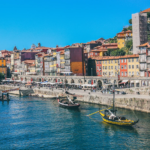
Dingle’s compact center is filled with colorful storefronts, small boutiques, cafés, pubs, galleries, and restaurants. The harbor gives the town its unmistakable coastal character, while the narrow streets make wandering part of the experience.
Spend an hour or two without following a strict itinerary. Walk along the waterfront, browse local shops, and stop whenever something catches your eye.
One of the town’s charms is its creative personality. You’ll find everything from traditional pubs to unusual businesses that blur the line between shop and social space. Foxy John’s, for example, is famous for its distinctive combination of pub and hardware store.
Travel tip: Dingle is one of those places where your best memories may come from the stops you never planned.
Drive the Slea Head Route
If you do only one major scenic drive around Dingle, make it the Slea Head Drive.
This spectacular coastal route takes you around the western end of the Dingle Peninsula, passing ancient archaeological sites, beaches, dramatic cliffs, traditional villages, and views toward the Blasket Islands. The road twists through some of the most memorable scenery in southwest Ireland.
Give yourself plenty of time. The route itself may not take all day, but you’ll want to stop constantly.
Along the way, look for:
- Dún Beag Fort
- Fahan Beehive Huts
- Coumeenoole Beach
- Dunquin Pier
- Dunmore Head
- Clogher Head
- Gallarus Oratory
- Blasket Islands viewpoints
The biggest mistake is treating Slea Head as a drive-through attraction. Pull over where it is safe, take photographs, walk short sections, and allow the landscape to unfold.
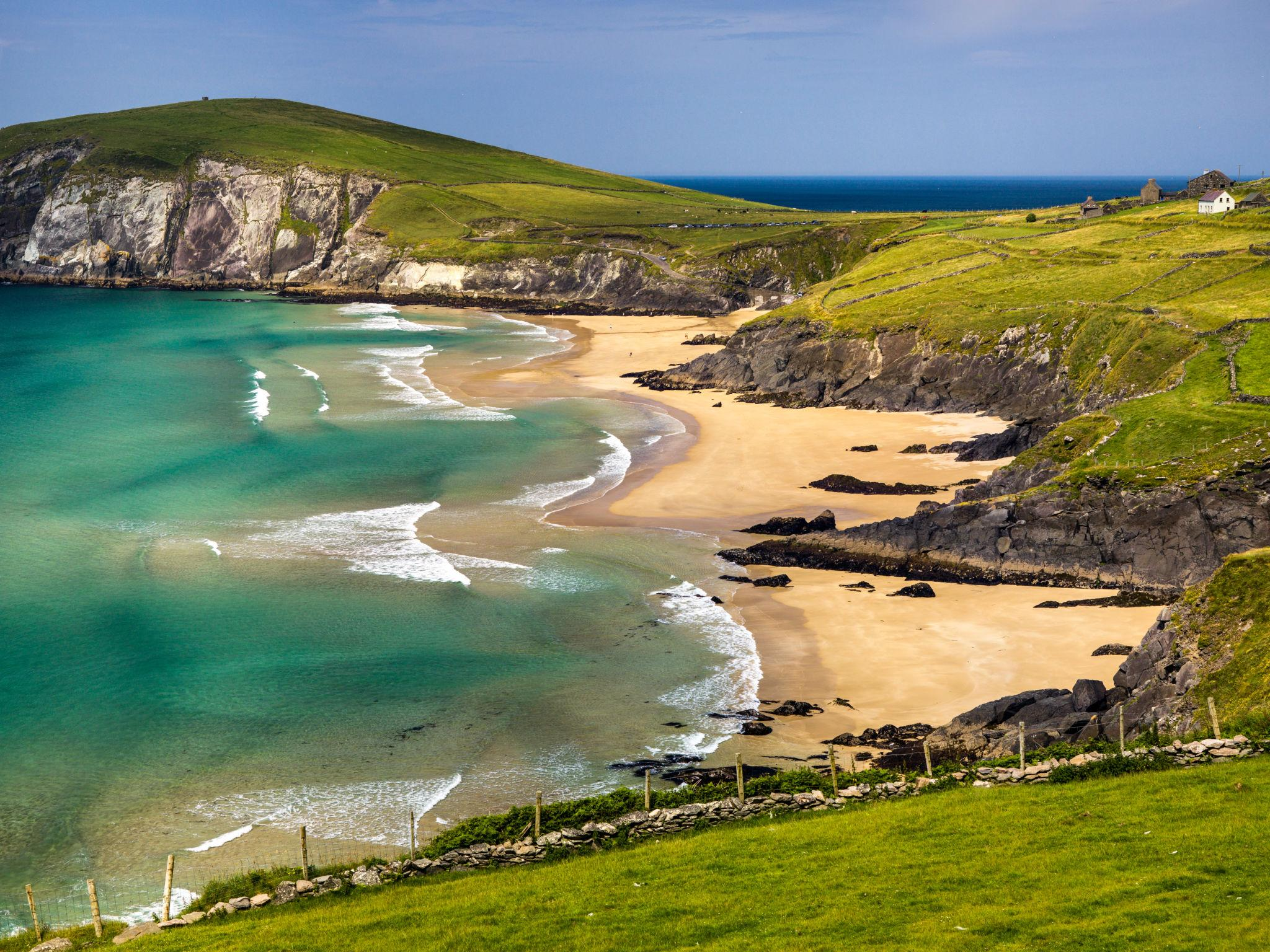
Visit Coumeenoole Beach
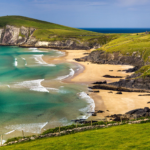
Coumeenoole Beach is one of the most dramatic coastal stops on the peninsula.
Expect a beautiful combination of sand, dark rocks, green hills, and restless Atlantic water. The scenery feels cinematic, and it is easy to understand why this coastline has attracted filmmakers.
The beach is particularly impressive when clouds move quickly across the sky and sunlight breaks through onto the water.
Photography tip: Visit early or late in the day for softer light and fewer people. Always be cautious near the water, especially in rough weather.
Tourism Ireland highlights Coumeenoole for its windswept beauty and views toward the Blasket Islands.
See Dunquin Pier and the Blasket Islands
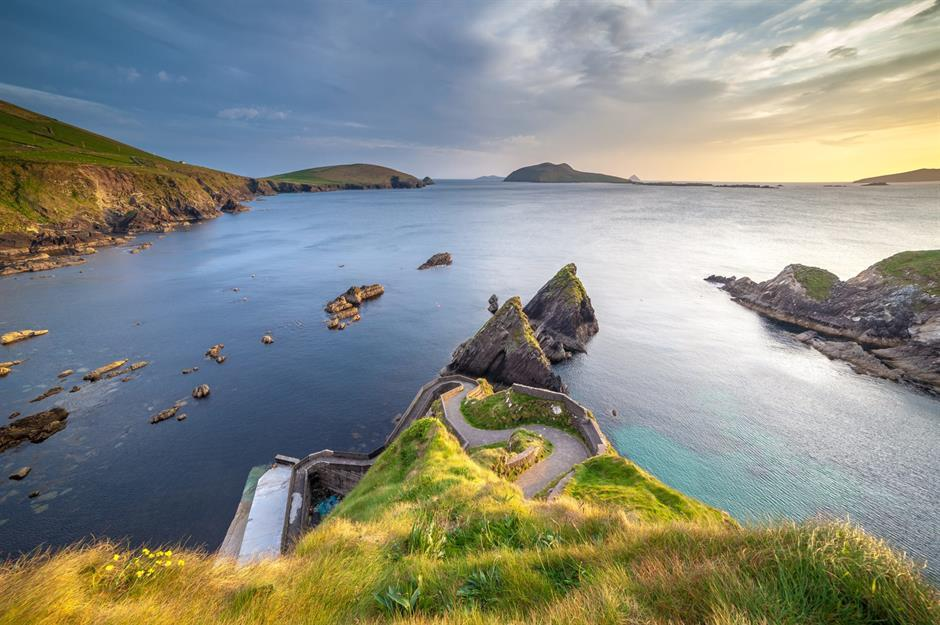
Dunquin Pier is one of the most photographed locations on the Dingle Peninsula.
The winding road descending toward the harbor creates a striking visual scene, especially when viewed from above. From here, you can look toward the remote Blasket Islands and imagine the difficult but fascinating lives once lived there.
If you’re visiting during a season when boat services operate, consider taking a trip to the Great Blasket Island. Conditions and schedules can change, so check locally before planning your day around a boat departure.
The Blasket Islands are deeply connected to Irish literature, storytelling, language, and folklore. They were home to famous writers and storytellers, making a visit about much more than scenery.
Visit the Blasket Centre
Before heading across the water, visit the Blasket Centre near Dunquin.
It’s an excellent introduction to the history and culture of the Blasket Islands. Exhibitions explore island life, traditions, storytelling, literature, and the experiences of the people who lived there.
Even if you don’t have time for the island boat trip, the centre helps you understand the landscape you’re looking at.
One particularly worthwhile feature is the outdoor viewing area, which offers a memorable perspective toward the Great Blasket.
Explore Gallarus Oratory
Gallarus Oratory is one of the peninsula’s most remarkable historic sites.
This small Early Christian church is built from carefully arranged dry stone and has a distinctive shape resembling an upturned boat. Tourism Ireland describes it as one of the best-preserved ancient churches of its type in Ireland, with its corbelled roof still intact.
The setting makes the experience even better. The oratory sits in a dramatic landscape with views toward Smerwick Harbour and Mount Brandon.
For a quieter visit, arrive early in the day or consider traveling outside the busiest summer period. The oratory itself is free to visit, while the nearby visitor facilities may charge an admission fee.
Discover Dún Beag Fort and Ancient Sites
History lovers should slow down around Dún Beag.
The ancient fort sits dramatically close to the Atlantic edge, reminding visitors that people have lived on this peninsula for thousands of years.
The surrounding region is filled with archaeological remains, including stone structures and beehive huts. The Fahan Beehive Huts are particularly interesting examples of the dry-stone building traditions found across the peninsula.
Rather than seeing these places as isolated monuments, think of them as pieces of a much larger story about settlement, religion, farming, survival, and life on Ireland’s Atlantic frontier.
Drive Over Conor Pass
For sweeping mountain views, head toward Conor Pass.
The route connects Dingle with the northern side of the peninsula and offers a completely different landscape from the coastal scenery around Slea Head.
As you climb, the scenery becomes more rugged. Mountains, valleys, lakes, and distant coastal views create an unforgettable panorama.
The road is narrow in places, so drive carefully and be prepared for changing weather. Tourism Ireland identifies Conor Pass as Ireland’s highest mountain road, making it a standout experience for scenic road-trippers.
Best for: Drivers, photographers, road-trippers, and anyone who enjoys dramatic landscapes.
Enjoy a Dingle Boat Tour
Seeing Dingle from the water gives you an entirely different perspective.
Boat trips from the harbor can offer views of the coastline, sea cliffs, marine life, and nearby islands. Depending on the tour and conditions, you may see seabirds and other wildlife.
For adventurous travelers, sea safaris and water activities can take you closer to the coastal scenery around Dingle Harbour, Slea Head, and the Blasket Islands.
Remember that Atlantic weather can change quickly. Boat trips are weather-dependent, so keep some flexibility in your itinerary.
Visit Dingle Oceanworld Aquarium
Traveling with children? Add Dingle Oceanworld Aquarium to your itinerary.
It’s a useful rainy-day attraction and an easy break from outdoor sightseeing. Visitors can see marine life including sharks, penguins, fish, and otters, while interactive experiences make it appealing to younger travelers.
It’s also a good option when strong winds or heavy rain make a coastal hike less enjoyable.
Taste Irish Whiskey at Dingle Distillery
If you appreciate Irish spirits, consider visiting Dingle Distillery.
The distillery represents the modern revival of independent craft distilling in Ireland and offers an opportunity to learn more about how Irish whiskey and other spirits are produced.
A tasting or tour can be a great addition to a rainy afternoon, particularly for couples and adult travelers.
Always check current tour availability and booking requirements before you arrive.
Enjoy Traditional Irish Music
Dingle after dark is a completely different experience.
The town’s pubs are famous for live music and traditional Irish sessions. You don’t need to understand every song or know the musicians. Just find a welcoming pub, order a drink, and listen.
The atmosphere is often informal and spontaneous, which is part of the charm.
Discover Ireland highlights Dingle’s lively traditional music culture and points travelers toward venues where regular sessions take place.
Local etiquette: If musicians are performing, keep conversations quieter nearby. These sessions are often about shared music rather than a formal concert.
Try Local Seafood and Irish Food
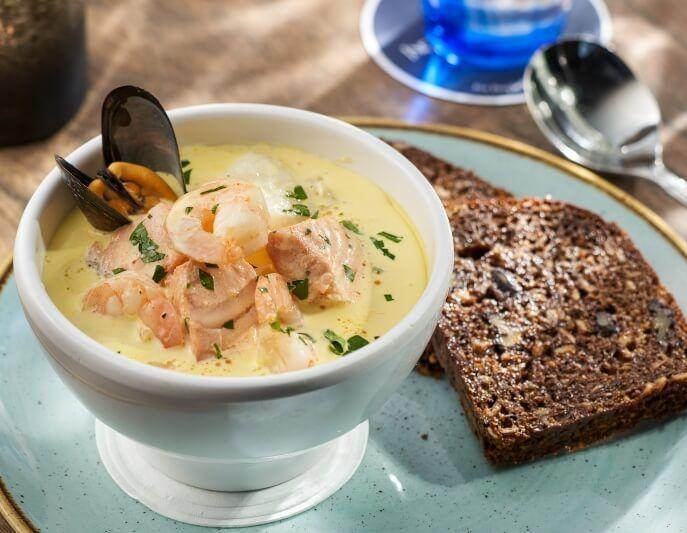
Dingle’s location on the Atlantic makes seafood a natural part of the local food scene.
Look for:
- Fresh fish
- Shellfish
- Oysters
- Smoked salmon
- Local lamb
- Irish cheeses
- Homemade bread
- Seasonal vegetables
- Craft beer
- Irish whiskey
- Local ice cream
For something sweet, try Murphy’s Ice Cream, which has become one of the town’s best-known food stops.
Food lovers can also look for experiences connected with the Dingle Peninsula Food & Drink Trail or consider a hands-on class at Dingle Cookery School, where local ingredients feature prominently.
Discover Dingle’s Creative Side
Dingle isn’t only about cliffs and beaches.
The town has a strong creative personality, with galleries, craft shops, pottery, jewelry, textiles, and locally made products.
Spend time browsing rather than rushing. You may find a handmade souvenir that feels much more meaningful than something mass-produced.
If you enjoy Irish crafts, consider visiting a local studio on the peninsula. Tourism Ireland specifically highlights Louis Mulcahy Pottery as a creative stop where visitors can explore Irish craft and find locally made pieces.
Go Hiking, Cycling, or Horse Riding
Outdoor enthusiasts have plenty of options.
The Dingle Peninsula is ideal for:
- Coastal walks
- Mountain hikes
- Long-distance trekking
- Cycling
- Horse riding
- Water sports
- Wildlife watching
The Dingle Way is one of the area’s major walking experiences, while shorter hikes and headland walks can suit travelers who don’t want a multi-day trek.
Horse riding is another memorable option. Some experiences combine mountain scenery with beach riding, giving you a completely different way to experience the peninsula.
Find Dingle’s Hidden Gems
Some of the best moments happen away from the headline attractions.
Look for:
- Quiet coastal viewpoints
- Small country lanes
- Stone walls covered in moss
- Tiny beaches
- Traditional cottages
- Less-visited archaeological sites
- Local craft workshops
- Small villages beyond Dingle town
The key is to leave room in your schedule.
Dingle rewards travelers who don’t treat every minute as a checklist.
Best Photography Spots in Dingle
Bring extra storage space on your phone or camera. You’ll probably need it.
Best places for photos
Slea Head: Dramatic Atlantic views and rugged cliffs.
Dunquin Pier: One of the peninsula’s most recognizable scenes.
Coumeenoole Beach: Perfect for moody coastal photography.
Gallarus Oratory: Excellent for architecture and history.
Conor Pass: Mountain landscapes and wide panoramas.
Dunmore Head: A beautiful location for coastal scenery.
Dingle Harbour: Best for colorful boats and town views.
Dingle town streets: Great for colorful storefronts and local character.
For the best light, aim for early morning or the golden hour before sunset. Ireland’s changeable weather can also create incredible skies, so don’t be disappointed by clouds.
Best Time to Visit Dingle
Summer: June to August
Summer offers longer days and generally the best conditions for outdoor adventures. However, it is also the busiest period.
Best for: Road trips, hiking, boat tours, families.
Spring: April to May
Spring brings fresh green landscapes and fewer visitors than peak summer.
Best for: Photography, scenic drives, peaceful travel.
Autumn: September to October
Autumn is an excellent compromise between weather, scenery, and crowds.
Best for: Couples, photographers, food lovers.
Winter: November to March
Winter is quieter and atmospheric. Some seasonal attractions and boat services may have limited schedules, so planning matters.
Best for: Slow travel, cozy pubs, dramatic weather, quiet streets.
My pick: Late spring or early autumn for a balance of scenery and atmosphere.
Dingle Weather and What to Expect
Dingle has a maritime climate, which means weather can change quickly.
You might experience:
- Sunshine
- Wind
- Rain
- Cloud
- Clear skies
Sometimes all within a few hours.
Don’t let a cloudy forecast automatically ruin your plans. In Dingle, dramatic weather can make the coastline even more beautiful.
The smartest approach is to dress in layers and carry waterproof clothing.
How to Get to Dingle
Dingle is located in County Kerry on Ireland’s southwest coast.
The nearest airports commonly used by travelers include:
- Kerry Airport
- Shannon Airport
- Cork Airport
You can also reach the region from Dublin, although the journey is considerably longer.
Tourism Ireland notes that travelers can fly into Kerry, Cork, or Shannon and continue toward the peninsula by road. Car rental is particularly useful for exploring the wider Dingle Peninsula.
Getting Around Dingle
By Car
A rental car is the most flexible choice for exploring Slea Head, Conor Pass, remote beaches, and archaeological sites.
However, some roads are narrow. Drive slowly and be patient when meeting other vehicles.
By Bicycle
Cycling can be rewarding for experienced riders, but hills and Atlantic winds can make routes challenging.
On Foot
Dingle town itself is very walkable.
Without a Car
It is still possible to experience Dingle without driving by combining local transport, guided tours, cycling, and walking. Discover Ireland also highlights car-free approaches to exploring parts of the Slea Head area.
Where to Stay in Dingle
Staying in Dingle town is ideal if you want:
- Easy access to restaurants
- Traditional pubs
- Evening music
- Walkable sightseeing
- Harbor views
Staying outside town may suit you better if you prefer:
- Peace and quiet
- Rural landscapes
- Romantic escapes
- Self-catering accommodation
For most first-time visitors, I recommend staying in or close to the town center for at least one night. That way, you can enjoy the evening atmosphere without worrying about driving back after a pub session.
What to Eat in Dingle
Don’t leave Dingle without trying some local specialties.
Seafood
Fresh fish and shellfish should be high on your list.
Irish Breakfast
A hearty Irish breakfast is perfect before a full day of driving and sightseeing.
Local Cheese and Bread
Look for locally produced ingredients wherever possible.
Irish Stew
A comforting choice on a cool, rainy day.
Ice Cream
Murphy’s is a popular choice for visitors exploring the town.
Whiskey
If you’re interested in Irish whiskey, consider a distillery visit or tasting experience.
Dingle Travel Tips
Start Early
Popular scenic stops are much more enjoyable before the busiest hours.
Keep Your Schedule Flexible
Weather can affect boat tours, hikes, and driving conditions.
Don’t Rush Slea Head
The scenery deserves time.
Book Popular Experiences
Boat trips and some guided activities can fill during busy periods.
Carry Cash
While cards are widely accepted, having some cash can still be useful for small purchases.
Respect the Landscape
Stay on designated paths where possible and avoid climbing unstable cliffs.
Learn a Few Irish Words
Dingle is located in a strong Irish-language area. Even a simple greeting can be a fun way to connect with local culture. Discover Ireland notes that Dingle is Ireland’s largest Gaeltacht town.
Travel Mistakes to Avoid
Trying to See Everything in One Day
Dingle isn’t designed for rushed sightseeing.
Ignoring the Weather
Always have a backup plan.
Driving Too Fast
The peninsula’s roads can be narrow and winding.
Skipping the Evening
Dingle’s cultural life really comes alive after the sightseeing crowds leave.
Forgetting Comfortable Shoes
You’ll walk more than you expect.
Not Leaving Time for Unplanned Stops
Some of the best views aren’t on your original itinerary.
Packing Tips for Dingle
Pack:
- Waterproof jacket
- Warm layers
- Comfortable walking shoes
- Small backpack
- Portable power bank
- Camera
- Sunglasses
- Reusable water bottle
- Travel adapter if needed
- Waterproof phone pouch
- Sunscreen
Even in summer, bring a rain jacket.
That’s not pessimism. That’s simply smart Irish travel planning.
Family Travel in Dingle
Dingle is an excellent family destination.
Children can enjoy:
- Dingle Oceanworld Aquarium
- Boat trips
- Beaches
- Wildlife experiences
- Short coastal walks
- Ice cream stops
- Scenic drives
For families, don’t overload your itinerary. Pick one major attraction and one outdoor experience each day.
Dingle for Couples
Dingle has plenty of romantic moments.
Drive Slea Head together, watch the sunset over the Atlantic, enjoy a seafood dinner, and finish the night listening to traditional music in a cozy pub.
For couples, the biggest attraction is often the atmosphere rather than a single landmark.
Dingle for Solo Travelers
Dingle is well suited to solo exploration.
The town is easy to navigate, while group tours and outdoor activities make it simple to meet other travelers.
A solo trip could include:
- Walking the town
- Joining a boat tour
- Taking a guided Slea Head trip
- Visiting the Blasket Centre
- Exploring local food
- Listening to live music
Suggested 1-Day Dingle Itinerary
Morning
Start in Dingle town with breakfast and a walk around the harbor.
Late Morning
Begin the Slea Head route.
Afternoon
Visit Dún Beag, Coumeenoole Beach, Dunquin Pier, and the Blasket Centre.
Late Afternoon
Visit Gallarus Oratory if time allows.
Evening
Return to Dingle for seafood and traditional Irish music.
Suggested 2-Day Dingle Itinerary
Day 1
- Explore Dingle town
- Visit Oceanworld
- Enjoy local food
- Visit Dingle Distillery
- Listen to live music
Day 2
- Drive Slea Head
- Visit Dún Beag
- Stop at Coumeenoole
- See Dunquin Pier
- Visit the Blasket Centre
- Explore Gallarus Oratory
- Return via scenic roads
Suggested 3-Day Dingle Itinerary
Day 1: Dingle Town
Explore the harbor, shops, galleries, food scene, and pubs.
Day 2: Slea Head
Spend the full day exploring the western peninsula.
Day 3: Outdoor Adventure
Choose between:
- Boat trip
- Great Blasket Island
- Hiking
- Cycling
- Horse riding
- Conor Pass scenic drive
Three days gives you enough time to slow down, which is exactly how Dingle should be experienced. Tourism Ireland also presents the peninsula as a multi-day destination combining landscapes, beaches, heritage, food, and outdoor experiences.
Frequently Asked Questions
What is Dingle Ireland best known for?
Dingle is best known for its spectacular coastal scenery, Slea Head Drive, traditional Irish music, seafood, archaeological sites, the Blasket Islands, and its colorful harbor town.
How many days do you need in Dingle?
I recommend at least two days. One day works for a quick visit, while three days allows you to explore the peninsula without rushing.
Is Dingle worth visiting?
Absolutely. Dingle is one of the best destinations in southwest Ireland for travelers who enjoy dramatic scenery, local culture, history, food, and outdoor adventures.
What is the best thing to do in Dingle?
For first-time visitors, driving the Slea Head route is one of the top experiences. Combine it with stops at Dunquin Pier, Coumeenoole Beach, and Gallarus Oratory.
Can you visit Dingle without a car?
Yes. You can explore the town on foot and use tours, local transport, cycling, and organized excursions for parts of the peninsula. However, a car gives you more flexibility.
Is Dingle good for families?
Yes. Families can enjoy Oceanworld, beaches, boat trips, scenic drives, and easy outdoor activities.
What is the best time to visit Dingle?
Late spring and early autumn are excellent choices for travelers who want a balance of pleasant conditions and fewer crowds. Summer is ideal for longer days but tends to be busier.
Is Dingle expensive?
Dingle can be moderately expensive during the busiest travel months. You can control costs by booking accommodation early, choosing casual local restaurants, and mixing paid attractions with free scenic experiences.
What should I not miss in Dingle?
Don’t miss Slea Head, Dunquin Pier, Coumeenoole Beach, Gallarus Oratory, Conor Pass, Dingle town, and at least one traditional music session.
Can you see the Blasket Islands from Dingle?
You can see the Blasket Islands from several locations around the peninsula, particularly along the western coast. Boat trips can provide a closer experience when conditions and seasonal services allow.
Is Dingle good for a road trip?
Yes. Dingle is an excellent road-trip destination, particularly when combined with the Wild Atlantic Way and other parts of County Kerry.
Final Thoughts
The best things to do in Dingle Ireland aren’t limited to a checklist of attractions. Yes, you should drive Slea Head, see Gallarus Oratory, visit Dunquin Pier, and explore the Blasket story. But you should also leave space for the unexpected—a quiet beach, a tiny village, a local conversation, or a traditional music session that lasts longer than planned.
Dingle is at its best when you slow down. Take the scenic road instead of the fastest one. Stop when the Atlantic view makes you pull over. Eat the local seafood. Listen to the music. Let the weather change your plans. Whether you’re visiting for one unforgettable day or spending several days exploring the entire peninsula, Dingle offers the kind of Irish experience that stays with you long after you’ve gone home.
Wander Beyond the Crowds: 27 Unmissable Things to Do in Limerick Ireland for an Authentic Irish Adventure (2026 Guide)