
Spain is one of Europe’s most fascinating travel destinations, attracting millions of visitors every year. While many travelers visit for its sunny beaches, historic cities, and world-famous landmarks, the country’s true beauty lies in its culture.Spain Cultural Travel Guide
A well-planned Spain Cultural Travel Guide allows visitors to experience authentic Spanish traditions, regional identities, local festivals, historic architecture, and everyday life beyond the typical tourist attractions.
Spain Cultural Travel Guide Spanish culture is a unique blend of Roman, Moorish, Jewish, and Christian influences that have shaped the country over thousands of years. Every region offers its own customs, language, cuisine, music, and celebrations, making Spain one of the most culturally diverse countries in Europe. Whether you explore the lively streets of Madrid, admire Gaudí’s masterpieces in Barcelona, experience flamenco in Andalusia, or attend a traditional village festival, each journey reveals another side of Spain’s rich cultural heritage.
What Is a Spanish Cultural Travel Guide?
A Spain Cultural Travel Guide is more than a list of tourist attractions. It focuses on helping travelers understand Spain’s traditions, customs, history, arts, food, festivals, and everyday lifestyle.
Instead of simply visiting famous landmarks, cultural travelers seek meaningful experiences by:
- Learning local traditions
- Visiting historic neighborhoods
- Exploring museums
- Tasting authentic regional cuisine
- Attending local festivals
- Respecting cultural customs
- Meeting local communities
This approach transforms a regular vacation into an enriching cultural journey.
Why Spain Is Known for Its Rich Culture
Spain has one of the richest cultural histories in the world. Its heritage reflects centuries of influence from different civilizations, including the Romans, Visigoths, Moors, Jews, and Christians.
Today, this unique combination is visible in nearly every aspect of Spanish life:
- Historic castles
- Ancient cathedrals
- Moorish palaces
- Roman ruins
- Colorful festivals
- Traditional music
- Flamenco performances
- Regional cuisines
- Local languages
- World-famous art
Each region preserves its own identity while contributing to Spain’s national culture.
A Brief History of Spanish Culture
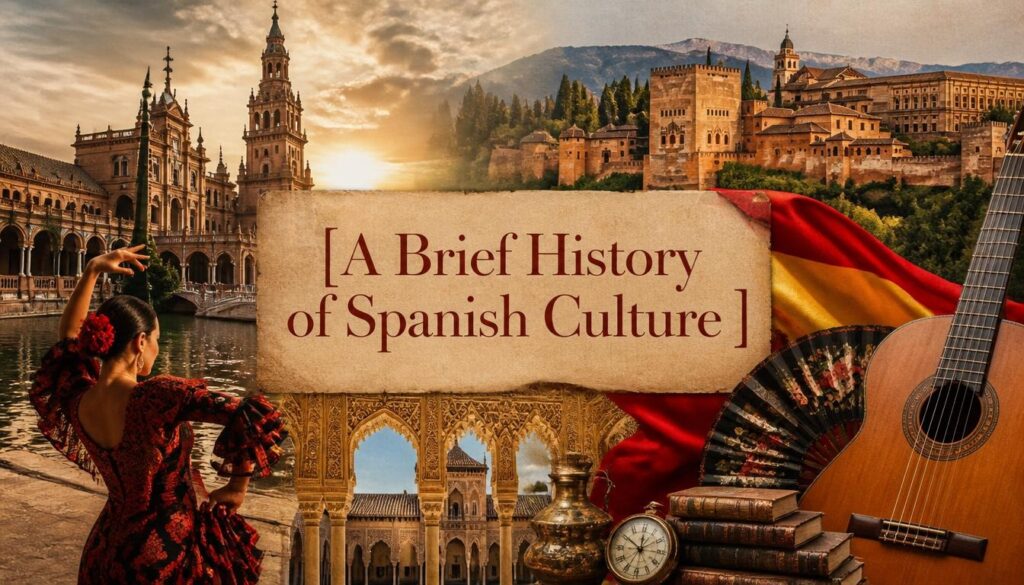
Understanding Spain’s history helps visitors appreciate its cultural diversity.
Roman Influence
The Romans ruled much of Spain for over 600 years. During this period, they built roads, bridges, aqueducts, theaters, and cities that still exist today.
Examples include:
- Segovia Aqueduct
- Roman Theatre of Mérida
- Tarragona Roman Ruins
Roman law, language, and architecture continue to influence Spanish society.
Moorish Influence
Beginning in 711 AD, Muslim rulers introduced advanced science, mathematics, agriculture, architecture, and art.
Some of Spain’s greatest landmarks come from this era:
- Alhambra in Granada
- Great Mosque of Córdoba
- Alcázar of Seville
Intricate tilework, peaceful courtyards, elegant arches, and beautiful gardens remain symbols of Moorish heritage.
Christian Kingdoms
After centuries of the Reconquista, Christian kingdoms united Spain and shaped many of its religious traditions.
This period produced:
- Gothic cathedrals
- Monasteries
- Pilgrimage routes
- Religious festivals
- Medieval towns
Many cultural celebrations today have roots in this historical era.
The Golden Age
During the 16th and 17th centuries, Spain became one of the world’s most powerful empires.
This era produced legendary artists and writers including:
- Miguel de Cervantes
- Diego Velázquez
- El Greco
Spanish literature, painting, and architecture flourished during this period.
Regional Diversity Across Spain
One of the most interesting aspects of any Spain Cultural Travel Guide is discovering how different each region feels.
Spain consists of autonomous communities, each with its own traditions and cultural identity.
Andalusia
Known for:
- Flamenco
- White villages
- Moorish architecture
- Olive groves
- Traditional tapas
- Bullfighting history
Major cities include:
- Seville
- Granada
- Córdoba
- Málaga
Catalonia
Catalonia offers a unique cultural identity.
Highlights include:
- Barcelona
- Modernist architecture
- Catalan language
- Human towers (Castells)
- Mediterranean cuisine
- Creative arts
Basque Country
The Basque region has one of Europe’s oldest cultures.
Visitors enjoy:
- Pintxos cuisine
- Basque language
- Mountain villages
- Coastal beauty
- Modern museums
- Strong regional traditions
Bilbao and San Sebastián are among its most famous cities.
Galicia
Located in northwestern Spain, Galicia is famous for:
- Celtic heritage
- Seafood
- Green landscapes
- Pilgrimage routes
- Traditional bagpipe music
- Historic villages
The Camino de Santiago attracts pilgrims from around the world.
Valencia
Valencia combines history with innovation.
Known for:
- Paella
- Fallas Festival
- Beaches
- Silk Exchange
- Modern architecture
- Mediterranean traditions
Madrid
Spain’s capital represents a blend of traditional and modern Spanish culture.
Visitors experience:
- Royal Palace
- Plaza Mayor
- World-class museums
- Historic neighborhoods
- Traditional markets
- Vibrant nightlife
Madrid offers one of the country’s best introductions to Spanish culture.
Spanish Traditions and Customs
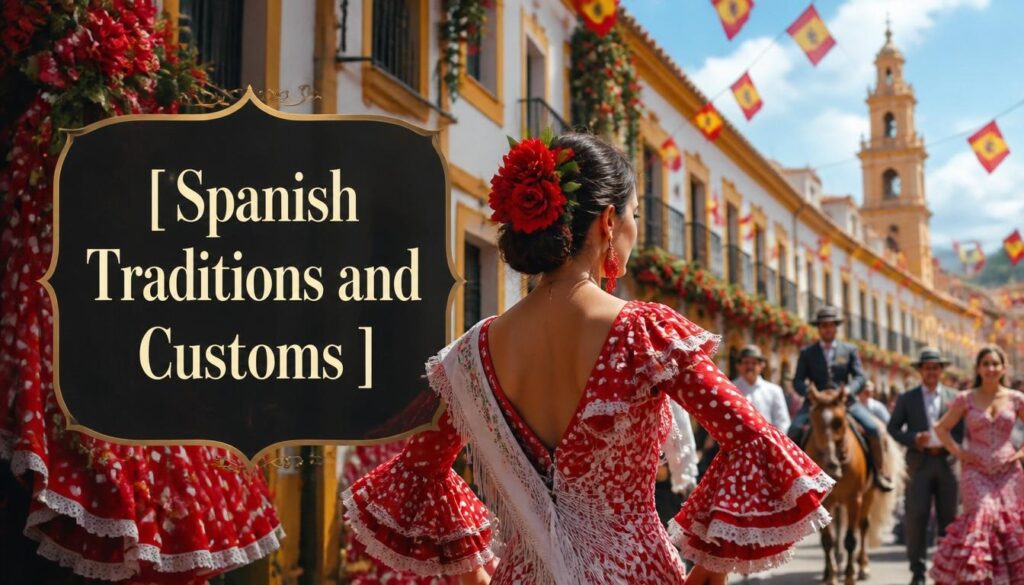
Spanish traditions remain an important part of everyday life.
Some of the most recognizable customs include:
Greeting People
People usually greet friends and relatives with two cheek kisses, while handshakes are common in formal situations
Siesta Tradition
Although modern lifestyles have changed, some smaller towns still observe afternoon breaks during the hottest hours of the day.
Late Dining
Spain is famous for eating later than many other countries.
Typical meal times include:
- Lunch: 2:00–4:00 PM
- Dinner: 9:00–11:00 PM
Visitors should plan their schedules accordingly.
Social Gatherings
Spaniards enjoy spending time with family and friends.
Common activities include:
- Café conversations
- Evening walks
- Outdoor dining
- Festivals
- Community celebrations
Social life is considered an important part of Spanish culture.
Language and Communication in Spain
Language is one of the most fascinating aspects of any Spain Cultural Travel Guide. While Spanish (Castilian) is the official language spoken throughout the country, several regions have their own co-official languages that are an important part of their cultural identity.
Main Languages Spoken in Spain
- Spanish (Castilian)
- Catalan
- Basque
- Galician
- Valencian (a variety of Catalan)
Learning a few basic Spanish phrases can greatly improve your travel experience. Locals appreciate visitors who make an effort to communicate respectfully.
Useful Spanish Phrases
- Hola – Hello
- Buenos días – Good morning
- Buenas tardes – Good afternoon
- Buenas noches – Good evening/night
- Gracias – Thank you
- Por favor – Please
- ¿Cuánto cuesta? – How much does it cost?
- ¿Dónde está…? – Where is…?
- Lo siento – I’m sorry
- Adiós – Goodbye
Even simple greetings can help create friendly interactions with local people.
Religion and Its Influence on Spanish Culture
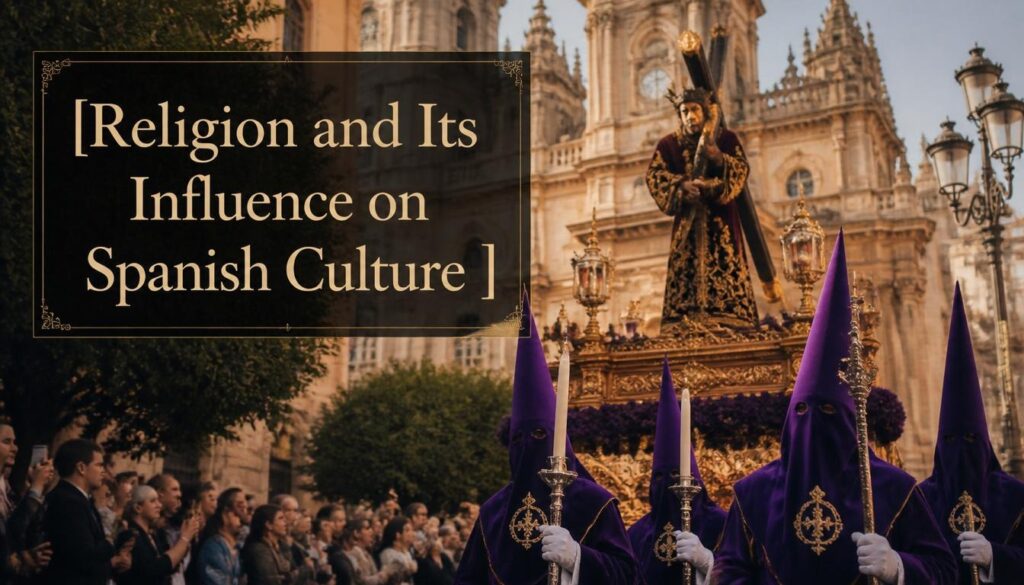
Religion has played a major role in shaping Spain’s traditions, architecture, festivals, and daily life.
Roman Catholicism has been the dominant religion for centuries. Although modern Spain is increasingly diverse and secular, religious traditions remain deeply connected to cultural celebrations.
Visitors will notice impressive churches, cathedrals, monasteries, and religious artwork across the country.
Some of the most famous religious sites include:
- Sagrada Família in Barcelona
- Cathedral of Santiago de Compostela
- Seville Cathedral
- Toledo Cathedral
- Burgos Cathedral
Many annual festivals also have religious origins, even though they are now enjoyed by people of all backgrounds.
Family Values in Spain
Family is at the heart of Spanish society.
Many Spanish families stay closely connected throughout their lives, and it is common for several generations to gather regularly for meals, celebrations, and holidays.
Important family traditions include:
- Sunday lunches
- Holiday gatherings
- Celebrating birthdays together
- Supporting elderly family members
- Spending weekends with relatives
Visitors often notice that family relationships are highly valued and respected.
Daily Lifestyle in Spain
One reason many visitors love Spain is its relaxed yet vibrant lifestyle.
Rather than rushing through the day, people often take time to enjoy meals, conversations, and outdoor activities.
Typical Daily Routine
Morning
People start work or school between 8:00 and 9:00 AM. Cafés become busy with customers enjoying coffee and pastries.
Afternoon
Lunch is the largest meal of the day and is often shared with family or colleagues.
Evening
Parks, plazas, cafés, and restaurants fill with people enjoying pleasant weather and socializing.
Night
Dinner usually begins later than in many countries, often after 9:00 PM.
This slower pace contributes to Spain’s welcoming atmosphere.
Spanish Hospitality
Hospitality is an important part of Spanish culture.
Visitors are often welcomed warmly by locals, especially when they show interest in local traditions and customs.
Helpful tips include:
- Be polite.
- Learn basic greetings.
- Respect local traditions.
- Dress appropriately when visiting churches.
- Arrive on time for guided tours.
- Accept invitations with gratitude.
Friendly behavior usually leads to positive experiences throughout the country.
Art and Architecture
Spain has produced some of the world’s greatest artists and architects.
Art lovers will discover an extraordinary collection of masterpieces spanning many centuries.
Pablo Picasso
Born in Málaga, Picasso transformed modern art through Cubism and other innovative styles.
His works can be seen in:
- Museo Picasso Málaga
- Museu Picasso Barcelona
Salvador Dalí
Dalí became famous for surrealist paintings filled with imagination and symbolism.
The Dalí Theatre-Museum in Figueres is one of Spain’s most unique attractions.
Diego Velázquez
Velázquez served as the court painter to King Philip IV and created masterpieces including Las Meninas, displayed at the Prado Museum.
Antoni Gaudí
Gaudí revolutionized architecture with colorful, nature-inspired designs.
His famous works include:
- Sagrada Família
- Park Güell
- Casa Batlló
- Casa Milà
His buildings have become symbols of Barcelona.
Famous Museums in Spain
A Spain Cultural Travel Guide would not be complete without exploring the country’s incredible museums.
Prado Museum (Madrid)
One of the world’s greatest art museums, featuring works by:
- Velázquez
- Goya
- El Greco
- Rubens
Reina Sofía Museum (Madrid)
Home to Picasso’s famous painting Guernica, this museum focuses on modern and contemporary art.
Guggenheim Museum Bilbao
Recognized for both its architecture and exhibitions, the Guggenheim transformed Bilbao into a global cultural destination
National Art Museum of Catalonia
Located in Barcelona, this museum showcases Romanesque, Gothic, Renaissance, and Modern art collections.
Traditional Spanish Music
Music is woven into everyday life across Spain.
Each region has its own traditional musical style.
Popular genres include:
- Flamenco
- Classical guitar
- Folk music
- Celtic music (Galicia)
- Basque folk songs
Live performances are common during festivals and local celebrations.
Flamenco: Spain’s Most Famous Cultural Expression
Flamenco originated in Andalusia and combines:
- Singing
- Guitar
- Dancing
- Hand clapping
- Emotional storytelling
Although often associated with tourism, authentic flamenco remains an important cultural tradition.
Watching a live flamenco performance is one of the most memorable cultural experiences in Spain.
Traditional Spanish Clothing
Although modern clothing is common today, traditional costumes remain popular during festivals.
Examples include:
Flamenco Dresses
Brightly colored dresses with ruffles worn during festivals in Andalusia.
Traje Corto
Traditional short jacket and trousers often worn during equestrian events.
Regional Costumes
Every autonomous community has traditional clothing reflecting its history and identity.
Festival days provide excellent opportunities to see these beautiful garments.
Spanish Festivals
Spain celebrates hundreds of festivals each year.
These events showcase local history, music, religion, food, and community spirit.
La Tomatina
Held in Buñol, participants throw thousands of tomatoes in one of the world’s most famous food festivals.
Running of the Bulls
Celebrated during the San Fermín Festival in Pamplona.
This internationally known event attracts thousands of visitors every year.
Las Fallas
Held in Valencia, Las Fallas features:
- Giant artistic sculptures
- Fireworks
- Traditional costumes
- Street parades
- Bonfires
It is recognized by UNESCO for its cultural importance.
Semana Santa
Holy Week processions take place across Spain before Easter.
Cities like Seville and Málaga host some of the country’s most spectacular religious celebrations.
Carnival
Spain’s Carnival celebrations feature colorful costumes, music, dancing, and parades.
The Carnival of Santa Cruz de Tenerife is among the largest in the world.
Cultural Etiquette for Visitors
Respecting local customs helps travelers enjoy a more meaningful experience.
Follow these simple tips:
- Dress modestly when visiting churches.
- Avoid speaking loudly in quiet public places.
- Wait to be seated in restaurants when required.
- Greet people politely.
- Respect local traditions and festivals.
- Learn a few Spanish phrases.
- Be patient with meal times, which are usually later than in many countries.
Showing cultural respect is often appreciated by local communities.
Spanish Cuisine: A Taste of Spain’s Culture
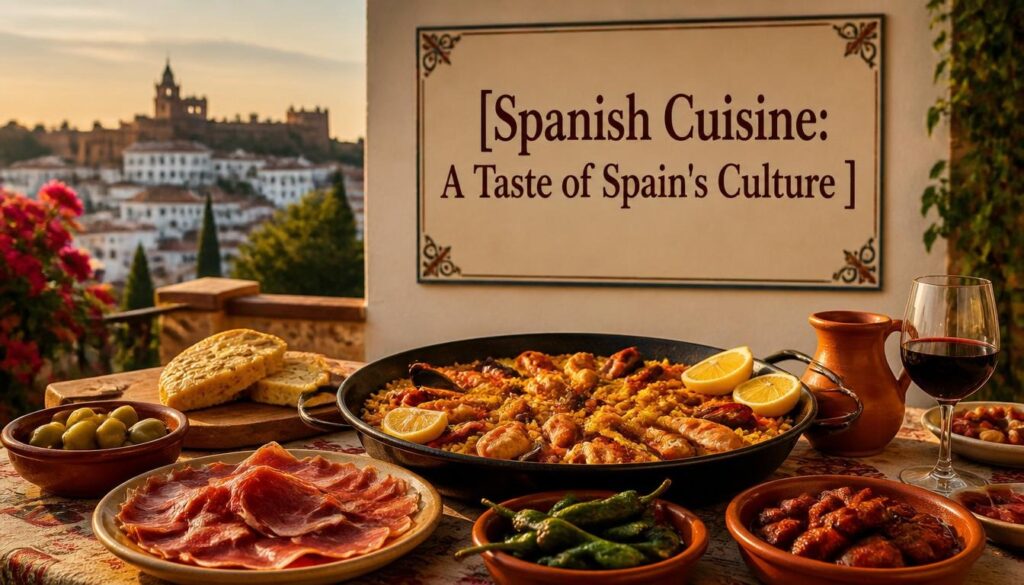
Food is one of the best ways to experience Spanish culture. Every region has its own recipes, ingredients, and cooking traditions. A Spain Cultural Travel Guide is incomplete without exploring the country’s diverse cuisine.
Famous Spanish Dishes
Paella
Originating in Valencia, paella is one of Spain’s most famous dishes. Traditional versions include seafood, chicken, rabbit, or vegetables cooked with saffron rice.
Tapas
Tapas are small plates served as appetizers or shared meals. Popular tapas include:
- Patatas Bravas
- Croquetas
- Tortilla Española
- Garlic Shrimp
- Manchego Cheese
Jamón Ibérico
This premium cured ham is considered one of Spain’s finest culinary specialties.
Gazpacho
A refreshing cold tomato soup, especially popular during the hot summer months in Andalusia.
Churros with Chocolate
A favorite breakfast or dessert, churros are crispy fried pastries served with thick hot chocolate.
Spanish Food Etiquette
Dining in Spain is a social experience rather than simply eating a meal.
Some useful etiquette tips include:
- Wait until everyone is served before eating.
- Say “Buen provecho” before beginning a meal.
- Enjoy meals slowly rather than rushing.
- Tipping is appreciated but generally modest.
- Sharing tapas with friends and family is common.
- Respect later meal times, especially dinner.
Shopping for Cultural Souvenirs
Visitors looking for meaningful souvenirs should consider locally made products instead of mass-produced items.
Popular cultural souvenirs include:
- Handmade ceramics
- Flamenco accessories
- Olive oil
- Saffron
- Spanish fans
- Leather goods
- Traditional textiles
- Local wines
- Artisan jewelry
- Handcrafted pottery
Supporting local artisans helps preserve Spain’s cultural traditions.
Best Cultural Cities to Visit in Spain
Madrid
Spain’s capital offers:
- Royal Palace
- Prado Museum
- Plaza Mayor
- Retiro Park
- Historic neighborhoods
- Traditional markets
Madrid is perfect for history lovers and art enthusiasts.
Barcelona
Barcelona combines history with modern creativity.
Highlights include:
- Sagrada Família
- Park Güell
- Gothic Quarter
- Casa Batlló
- La Rambla
- Mediterranean beaches
Seville
Seville is considered the heart of Andalusian culture.
Visitors enjoy:
- Flamenco shows
- Seville Cathedral
- Royal Alcázar
- Plaza de España
- Orange tree-lined streets
Granada
Granada reflects centuries of Moorish influence.
Top attractions include:
- Alhambra Palace
- Albaicín District
- Traditional tea houses
- Mountain views
Córdoba
Known for its remarkable history, Córdoba features:
- Mezquita-Cathedral
- Roman Bridge
- Flower-filled patios
- Historic Jewish Quarter
Valencia
Valencia offers a blend of history and innovation.
Don’t miss:
- City of Arts and Sciences
- Central Market
- Historic Old Town
- Malvarrosa Beach
Bilbao
Bilbao has transformed into a modern cultural destination while preserving Basque traditions.
Major attractions include:
- Guggenheim Museum
- Casco Viejo (Old Town)
- Riverside promenade
- Basque cuisine
Cultural Experiences You Should Not Miss
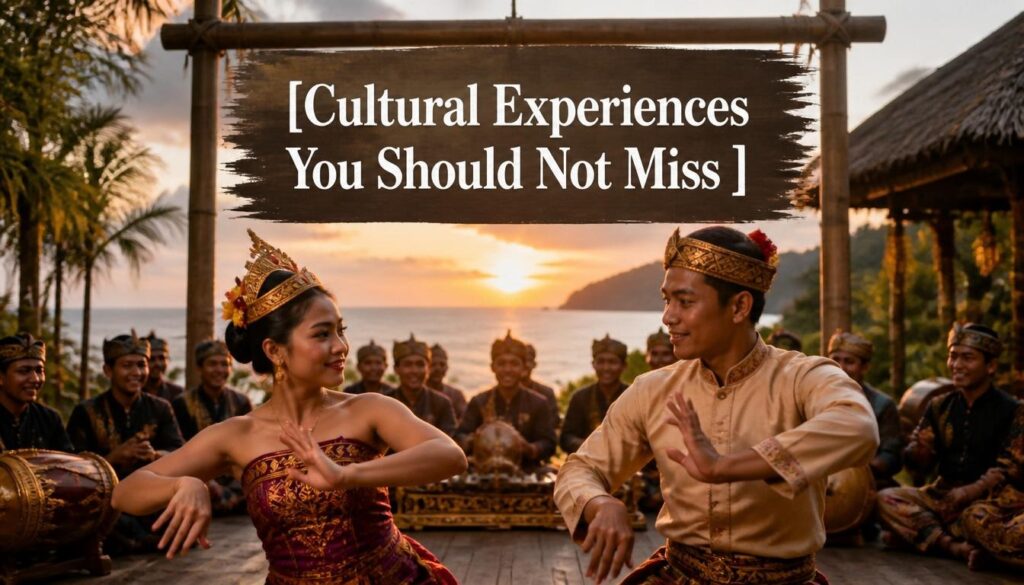
To make the most of your Spain Cultural Travel Guide, include these experiences in your itinerary:
- Watch an authentic flamenco performance.
- Visit a local food market.
- Attend a traditional festival.
- Explore UNESCO World Heritage Sites.
- Take a guided walking tour of a historic city.
- Taste regional dishes in family-owned restaurants.
- Visit local museums and art galleries.
- Walk through medieval villages.
- Experience traditional music performances.
- Meet local artisans and craftspeople.
Practical Cultural Travel Tips
Before traveling to Spain, keep these tips in mind:
- Learn a few basic Spanish phrases.
- Respect regional customs and traditions.
- Dress appropriately when visiting religious sites.
- Carry cash for small purchases.
- Book popular attractions in advance.
- Stay aware of local holidays and festivals.
- Use public transportation to explore cities.
- Support local businesses whenever possible.
- Be open to trying new foods.
- Take time to enjoy Spain’s relaxed lifestyle.
Sustainable Cultural Tourism
Responsible travel helps protect Spain’s cultural heritage for future generations.
You can travel responsibly by:
- Respecting historic monuments.
- Following local regulations.
- Avoiding littering.
- Supporting local artisans.
- Choosing eco-friendly accommodations.
- Respecting religious ceremonies.
- Reducing plastic waste.
- Protecting natural parks and beaches.
Sustainable tourism benefits both visitors and local communities.
Why Choose a Cultural Trip to Spain?
A cultural journey offers much more than sightseeing.
It allows travelers to:
- Understand local traditions.
- Learn about Spanish history.
- Experience authentic cuisine.
- Appreciate world-famous art.
- Discover regional diversity.
- Build meaningful travel memories.
- Connect with local communities.
This deeper understanding makes every visit more rewarding.
Frequently Asked Questions (FAQs)
What is the best time to experience Spain’s culture?
Spring (March to May) and autumn (September to November) are ideal for cultural travel because of pleasant weather, fewer crowds, and many local festivals.
Is Spain suitable for first-time international travelers?
Yes. Spain has an excellent transportation system, welcoming locals, rich history, and a wide variety of cultural attractions, making it a great destination for first-time visitors.
What cultural experiences should every visitor try in Spain?
Every traveler should watch a flamenco performance, visit historic landmarks, explore local markets, taste authentic tapas and paella, tour world-class museums, and attend a traditional Spanish festival if possible
Conclusion
A Spain Cultural Travel Guide is the perfect companion for travelers who want to experience the true spirit of Spain. From ancient Roman ruins and magnificent Moorish palaces to vibrant festivals, world-class museums, delicious cuisine, and warm hospitality, Spain offers an unforgettable cultural journey.
Whether you are exploring the bustling streets of Madrid, admiring Gauss’s masterpieces in Barcelona, enjoying authentic flamenco in Seville, or tasting traditional paella in Valencia, every destination reveals a unique story.Spain Cultural Travel Guide By respecting local customs, embracing regional traditions, and engaging with local communities, you can create meaningful memories that go far beyond ordinary sightseeing
Also Read;
Italy Road Trip Guide: Scenic Routes, Driving Tips & Must-Visit Destinations
Athens Travel Guide 2026: Best Things to Do, Where to Stay & Travel Tips