
If you’re searching for the best Things to Do in Kruger National Park, you’re planning a trip to one of the world’s greatest wildlife destinations. Covering nearly 20,000 square kilometers in northeastern South Africa, Kruger National Park is famous for its incredible safari experiences, diverse ecosystems, and the chance to see the legendary Big Five in their natural habitat.
Whether you’re a first-time safari traveler, an experienced wildlife photographer, or planning a once-in-a-lifetime family adventure, Kruger offers something unforgettable. From sunrise game drives and luxury safari lodges to guided bush walks and hidden picnic spots, every day brings a new opportunity to connect with nature.
This complete 2026 guide covers everything you need to know before visiting Kruger National Park. You’ll discover the top attractions, must-do safari experiences, travel costs, best accommodations, practical tips, seasonal advice, and insider recommendations to help you make the most of your journey.
What are the best Things to Do in Kruger National Park?
The best activities include:
- Spot the Big Five on a game drive
- Join an early morning safari
- Experience a guided walking safari
- Stay at a luxury safari lodge
- Visit famous waterholes
- Photograph African wildlife
- Drive scenic safari routes
- Explore birdwatching hotspots
- Enjoy sunset and night drives
- Visit nearby private game reserves
Table of Contents
- Why Visit Kruger National Park?
- Kruger National Park Overview
- Quick Facts
- Top Reasons Travelers Love Kruger
- The Best Things to Do in Kruger National Park
- See the Big Five
- Self-Drive Safaris
- Guided Game Drives
- Walking Safaris
- Night Safaris
- Wildlife Photography
- Birdwatching
- Scenic Routes
- Best Picnic Areas
- Hidden Gems
- Best Time to Visit
- Weather Guide
- Where to Stay
- Budget Planning
- Family Travel Tips
- Suggested Itinerary
- FAQs
- Conclusion
Kruger National Park Overview
Kruger National Park is South Africa’s largest and most famous national park. Established in 1898, it protects an extraordinary variety of wildlife, landscapes, and ecosystems. Stretching approximately 360 kilometers from north to south, the park is home to more than 500 bird species, 147 mammals, hundreds of reptiles, and thousands of plant species.
Visitors come from across the globe hoping to witness unforgettable wildlife encounters, especially sightings of lions, elephants, rhinos, leopards, and buffalo.
Unlike many safari destinations, Kruger offers excellent roads, affordable accommodations, luxury lodges, and the unique option of self-driving through the park.
Quick Facts About Kruger National Park
| Feature | Details |
| Country | South Africa |
| Province | Limpopo & Mpumalanga |
| Size | Nearly 20,000 sq km |
| Established | 1898 |
| Famous For | Big Five Safari |
| Best For | Wildlife, Photography, Family Trips |
| Number of Mammals | 147+ |
| Bird Species | 500+ |
| Entrance Gates | 10+ |
| UNESCO Status | Part of Greater Limpopo Transfrontier Conservation Area |
Why Visit Kruger National Park?
Many travelers dream of going on an African safari, and Kruger National Park consistently ranks among the best places to experience one. Its combination of abundant wildlife, accessible infrastructure, and varied landscapes makes it suitable for both first-time visitors and seasoned adventurers.
Here are some of the biggest reasons to visit:
- Incredible Big Five sightings
- Excellent self-drive safari opportunities
- Wide range of accommodations for every budget
- Professional guided safari tours
- Rich biodiversity
- Outstanding birdwatching
- Beautiful African sunsets
- Family-friendly camps
- Luxury safari experiences
- Easy access from Johannesburg
What Makes Kruger Different?
Unlike many wildlife reserves that require guided tours, Kruger allows visitors to explore much of the park independently. This gives travelers the freedom to spend extra time at waterholes, follow scenic routes, and enjoy wildlife sightings at their own pace.
The park also offers a balance between adventure and comfort. You can spend one night camping under the stars and the next in a luxury lodge with gourmet dining and panoramic views of the bush.
Top Reasons Travelers Love Kruger National Park
Incredible Wildlife Diversity
Kruger is home to one of Africa’s richest concentrations of wildlife. Beyond the famous Big Five, visitors often see:
- Cheetahs
- Wild dogs
- Giraffes
- Hippos
- Zebras
- Crocodiles
- Hyenas
- Warthogs
- Antelope species
- Monkeys and baboons
Every safari drive offers a different experience, making each visit unique.
Excellent Safari Infrastructure
Kruger features well-maintained roads, clearly marked routes, visitor centers, fuel stations, restaurants, shops, and rest camps. This makes it one of the easiest African safari parks to explore without extensive planning.
Amazing Birdwatching
Bird lovers can spend days exploring Kruger’s diverse habitats. From colorful kingfishers and bee-eaters to majestic martial eagles and vultures, the park provides excellent opportunities for bird photography throughout the year.
Photography Paradise
Whether you’re using a smartphone or a professional camera, Kruger offers breathtaking photography opportunities.
Popular photography subjects include:
- Lions at sunrise
- Elephants crossing rivers
- Leopards resting in trees
- Giraffes against dramatic sunsets
- Herds of buffalo
- African fish eagles
- Colorful landscapes after summer rains
Travel Tip: Early morning and late afternoon provide the softest natural light, making them the best times for wildlife photography.
The Best Things to Do in Kruger National Park
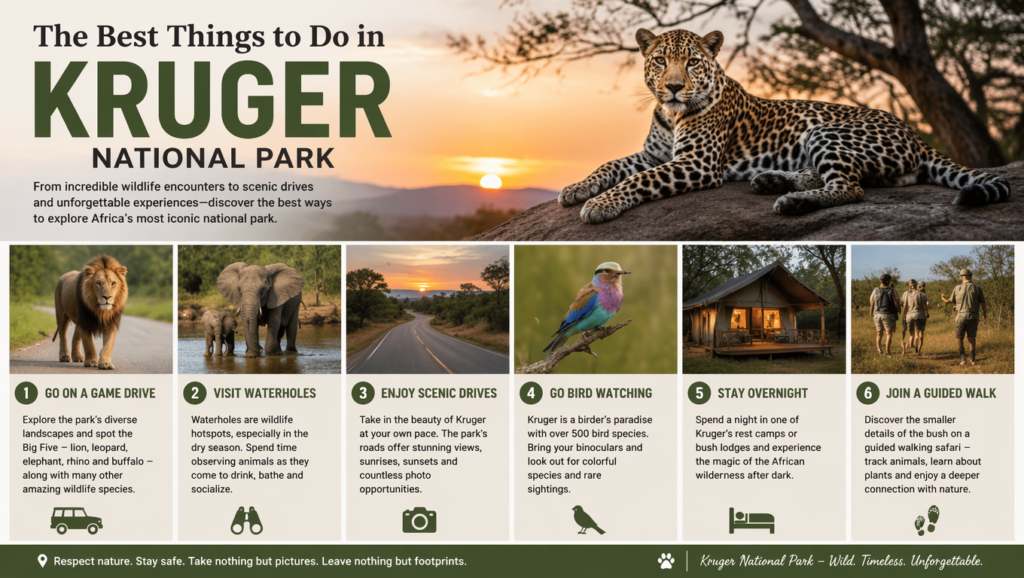
Kruger offers far more than simply driving through the bush. Visitors can choose from exciting safari experiences, educational activities, scenic adventures, and unforgettable wildlife encounters.
Below are some of the top experiences that should be on every traveler’s itinerary.
Go on a Sunrise Game Drive
One of the most rewarding experiences in Kruger National Park is a sunrise game drive. As the first light spreads across the African savanna, many animals become active before the midday heat sets in.
Early morning is often the best time to spot:
- Lions returning from a hunt
- Leopards moving through the bush
- Hyenas searching for food
- Elephants gathering near water
- Giraffes feeding on acacia trees
- Herds of impala and zebra
The cool morning temperatures also make the drive more comfortable, while the golden light creates outstanding conditions for photography.
Why Sunrise Drives Are Special
- Higher chances of predator sightings
- Cooler weather
- Fewer vehicles on the roads
- Beautiful sunrise scenery
- Excellent photography lighting
Spot the Famous Big Five
No visit to Kruger is complete without searching for Africa’s legendary Big Five:
| Animal | Best Habitat |
| Lion | Open grasslands |
| Leopard | Rocky areas and trees |
| Elephant | Rivers and woodland |
| Rhino | Open bushveld |
| Buffalo | Waterholes and plains |
Originally known as the most challenging animals to hunt on foot, the Big Five are now the ultimate wildlife-viewing goal for safari travelers.
Many visitors are fortunate enough to see all five during a stay of three to five days.
Expert Note
The key to successful wildlife viewing in Kruger is patience. Instead of rushing from one location to another, spend time near rivers, waterholes, and open plains where animals naturally gather.
Experience a Self-Drive Safari
One of the biggest advantages of visiting Kruger National Park is the freedom to enjoy a self-drive safari. Unlike many African reserves where guided tours are mandatory, Kruger has an excellent network of paved and gravel roads that allow visitors to explore at their own pace.
A self-drive safari lets you decide when to stop, which routes to take, and how long to watch animals. It also makes Kruger one of the most affordable safari destinations in Africa.
Benefits of a Self-Drive Safari
- Travel at your own pace
- Save money on guided tours
- Spend more time at wildlife sightings
- Choose your own daily schedule
- Great for photographers
- Flexible for families
Self-Drive Tips
✔ Start driving as soon as the gates open.
✔ Carry printed or offline maps.
✔ Keep your fuel tank topped up.
✔ Obey all speed limits.
✔ Stay inside your vehicle unless you’re in designated areas.
✔ Bring binoculars for distant wildlife.
✔ Be patient—nature rewards those who wait.
Join a Guided Safari Drive
Although self-driving is popular, joining a guided safari is one of the best ways to discover Kruger.
Professional guides know animal behavior, understand tracking techniques, and stay connected with other guides who share recent wildlife sightings.
You’ll also learn fascinating facts about:
- Animal behavior
- Bird identification
- Local ecosystems
- Plant life
- Conservation efforts
- African history
Types of Guided Safaris
| Safari Type | Best For |
| Morning Safari | Active wildlife |
| Afternoon Safari | Scenic landscapes |
| Sunset Safari | Beautiful lighting |
| Night Safari | Nocturnal animals |
| Full-Day Safari | Maximum wildlife viewing |
| Private Safari | Personalized experience |
Pro Tip
If your budget allows, combine a self-drive safari with one or two guided game drives. You’ll enjoy the flexibility of exploring independently while also benefiting from an expert’s knowledge.
Go on a Guided Walking Safari
Walking through the African bush offers a completely different perspective than driving.
Led by armed and highly trained rangers, walking safaris allow visitors to notice the smaller details often missed from a vehicle.
You’ll learn about:
- Animal tracks
- Birds
- Insects
- Native trees
- Medicinal plants
- Animal behavior
- Bush survival skills
Walking quietly through nature creates an exciting sense of adventure while encouraging a deeper appreciation for Kruger’s ecosystems.
Highlights
- Small groups
- Professional guides
- Close connection with nature
- Educational experience
- Incredible photography opportunities
Safety Note
Walking safaris are carefully managed. Guests must always follow the guide’s instructions and maintain a safe distance from wildlife.
Take a Night Safari
Many fascinating African animals become active only after sunset.
Night drives reveal a completely different side of Kruger National Park.
Animals commonly spotted include:
- Leopards
- Hyenas
- Porcupines
- Bush babies
- Civets
- Genets
- Owls
- Honey badgers
Special spotlights help guides locate animals without disturbing them.
For many visitors, a night safari becomes one of the most memorable experiences of the trip.
Visit Famous Waterholes
Waterholes are among the best places to observe wildlife throughout the day.
Especially during the dry season, animals gather to drink, creating incredible viewing opportunities.
Popular sightings include:
- Elephant herds
- Buffalo
- Zebras
- Giraffes
- Warthogs
- Hippos
- Crocodiles
- Lions waiting nearby
Some visitors spend over an hour quietly watching the natural interactions around a single waterhole.
Wildlife Viewing Tip
Instead of constantly driving, choose one productive waterhole and wait. Wildlife often comes to you.
Discover Kruger’s Scenic Driving Routes
Kruger isn’t just about wildlife. The landscapes are equally impressive.
You’ll travel through:
- Open savannas
- Dense forests
- River valleys
- Granite hills
- Ancient baobab regions
- Seasonal wetlands
Every section of the park has its own unique scenery and wildlife.
Popular Scenic Roads
| Route | Highlights |
| Skukuza to Lower Sabie | Excellent Big Five sightings |
| Satara Area | Lions and open plains |
| Crocodile Bridge Region | Predator activity |
| Letaba Area | Elephants |
| Pafuri Region | Birdwatching and baobabs |
Photograph African Wildlife
Kruger National Park ranks among the world’s top wildlife photography destinations.
Even beginners can capture stunning images.
Popular photography subjects include:
- Lion cubs
- Elephant families
- Leopard in trees
- Cheetahs
- African sunsets
- Birds in flight
- Hippos
- Crocodiles
- Zebras crossing roads
- Giraffes feeding
Photography Equipment
| Equipment | Recommended |
| DSLR or Mirrorless Camera | Yes |
| Telephoto Lens (200–600mm) | Ideal |
| Binoculars | Highly Recommended |
| Bean Bag | Helpful for vehicle photography |
| Extra Batteries | Essential |
| Memory Cards | Carry extras |
Expert Photographer Tip
Focus on animal behavior instead of simply taking close-up portraits. Images showing interactions between animals often tell the most compelling stories.
Enjoy World-Class Birdwatching
Kruger is one of Africa’s finest birdwatching destinations.
More than 500 bird species have been recorded throughout the park.
Bird enthusiasts may spot:
- Martial Eagle
- African Fish Eagle
- Lilac-breasted Roller
- Saddle-billed Stork
- Southern Ground Hornbill
- Kingfishers
- Bee-eaters
- Hornbills
- Herons
- Owls
The rainy season attracts many migratory birds, making it an excellent time for bird lovers.
Watch African Sunsets
Few travel experiences compare to watching the African sky transform into brilliant shades of orange, pink, and deep purple.
Popular sunset viewpoints include:
- River crossings
- Open grasslands
- Hilltops
- Safari lodges
- Designated picnic areas
As the sun sets, wildlife often becomes active again, creating magical safari moments.
Travel Tip Box
Best Time for Sunset Photography
- Arrive 30–45 minutes before sunset.
- Keep your camera ready.
- Use silhouettes creatively.
- Include trees or wildlife in the foreground.
- Stay until after the sun disappears, as colors often become even richer.
Stay in a Luxury Safari Lodge
One of the best ways to experience Kruger is by staying in a luxury safari lodge.
These accommodations combine comfort with unforgettable wildlife experiences.
Many offer:
- Infinity pools
- Private decks
- Gourmet dining
- Spa treatments
- Guided safaris
- Bush dinners
- Outdoor showers
- River views
Luxury lodges often include game drives in the room rate, making travel planning easier.
Lodge Experience Highlights
Morning coffee while elephants walk past.
Outdoor breakfasts overlooking the bush.
Evening campfires under millions of stars.
Fine dining surrounded by nature.
Expert-guided safari adventures.
Camp Under the African Stars
Travelers looking for adventure can stay in one of Kruger’s public campsites.
Camping allows visitors to hear lions roaring in the distance, hyenas calling at night, and birds greeting the sunrise.
Camping facilities typically include:
- Shared kitchens
- Restrooms
- Braai (barbecue) areas
- Electricity at many sites
- Camp shops
- Restaurants nearby
Camping is one of the most budget-friendly ways to experience Kruger while staying close to nature.
Comparison: Camping vs Safari Lodge
| Feature | Camping | Safari Lodge |
| Cost | Low | High |
| Comfort | Basic | Luxury |
| Wildlife Experience | Excellent | Excellent |
| Guided Activities | Optional | Usually Included |
| Dining | Self-catering | Full Service |
| Best For | Budget Travelers | Luxury Travelers |
Visit the Best Picnic Spots
One of the simple pleasures of exploring Kruger National Park is taking a break at one of its scenic picnic areas. These designated spots allow visitors to stretch their legs, enjoy a meal, and soak in the peaceful surroundings while staying safely within fenced areas.
Many picnic sites have shaded seating, restrooms, small cafés, and viewpoints overlooking rivers or open bushveld.
Popular Picnic Spots
| Picnic Spot | Why Visit | Best For |
| Afsaal | Shady trees and restaurant | Breakfast stop |
| Tshokwane | Famous for local snacks | Midday lunch |
| Nkuhlu | Sabie River views | Wildlife watching |
| Mlondozi Dam | Scenic lookout | Photography |
| Timbavati | Quiet atmosphere | Relaxation |
Travel Tip: Arrive early during peak travel seasons to secure a good table
e and enjoy the cooler morning weather.
Explore Kruger’s Hidden Gems
Beyond the famous roads and popular camps, Kruger has countless lesser-known places where patient travelers are rewarded with quieter wildlife encounters.
Lesser-Known Experiences
Remote Northern Kruger
The northern section receives fewer visitors, offering a more peaceful safari experience. This region is known for giant baobab trees, rare antelope species, and excellent birdwatching.
Quiet Gravel Roads
Some of the park’s gravel roads receive far less traffic than the main routes. Driving these roads slowly often leads to surprising wildlife sightings without crowds.
Seasonal Rivers
Dry riverbeds may look empty at first, but they often attract elephants, predators, and birds during different times of the year.
Small Waterholes
While famous waterholes can become busy, smaller pools often provide intimate wildlife viewing opportunities.
Expert Note
Don’t focus only on checking animals off a list. Some of the most memorable safari moments come from simply watching natural behavior, such as elephants playing in water or giraffes quietly feeding at sunset.
Best Time to Visit Kruger National Park
Choosing the right season depends on what kind of safari experience you’re looking for.
Dry Season (May–September)
The dry winter months are generally considered the best time for wildlife viewing.
Advantages
- Animals gather around water sources.
- Grass is shorter, making wildlife easier to spot.
- Comfortable daytime temperatures.
- Lower humidity.
- Excellent photography conditions.
Green Season (October–April)
The rainy season transforms Kruger into a lush green paradise.
Advantages
- Beautiful landscapes.
- Baby animals are born.
- Excellent birdwatching.
- Fewer tourists.
- Dramatic skies for photography.
Seasonal Comparison
| Season | Wildlife Viewing | Birdwatching | Photography | Crowds |
| May | Excellent | Good | Excellent | Moderate |
| June | Excellent | Good | Excellent | Moderate |
| July | Outstanding | Good | Excellent | Busy |
| August | Outstanding | Good | Excellent | Busy |
| September | Excellent | Very Good | Excellent | Busy |
| October | Good | Excellent | Great | Moderate |
| November | Good | Outstanding | Beautiful | Quiet |
| December | Good | Excellent | Lush scenery | Busy holidays |
| January | Fair | Excellent | Green landscapes | Quiet |
| February | Fair | Excellent | Beautiful | Quiet |
| March | Good | Very Good | Excellent | Moderate |
| April | Very Good | Good | Excellent | Moderate |
Weather in Kruger National Park
Kruger enjoys a subtropical climate with warm temperatures throughout most of the year.
| Season | Day Temperature | Night Temperature |
| Winter | 68–82°F (20–28°C) | 41–54°F (5–12°C) |
| Summer | 82–100°F (28–38°C) | 64–75°F (18–24°C) |
Weather Tips
- Summer afternoons can become extremely hot.
- Winter mornings may be surprisingly cold.
- Carry sunscreen throughout the year.
- Stay hydrated during safari drives.
How to Reach Kruger National Park
Kruger National Park is well connected by road and air, making it accessible for international travelers.
By Air
The fastest option is flying into one of the airports near the park.
Popular airports include:
- Skukuza Airport
- Kruger Mpumalanga International Airport
- Hoedspruit Airport
- Phalaborwa Airport
Many safari lodges provide airport transfers.
By Car
Driving from Johannesburg takes approximately 4.5 to 6 hours depending on which entrance gate you use.
Roads are generally in good condition and suitable for rental cars.
Guided Tours
Many travelers choose organized safari packages that include transportation, accommodation, meals, and guided game drives.
Park Entrance Gates
Kruger has several entrance gates that provide access to different regions of the park.
| Gate | Best For |
| Paul Kruger Gate | Skukuza area |
| Crocodile Bridge Gate | Southern wildlife |
| Malelane Gate | Southern safari |
| Phabeni Gate | Easy access |
| Orpen Gate | Predator sightings |
| Phalaborwa Gate | Central region |
| Punda Maria Gate | Northern Kruger |
Choosing the right gate depends on your itinerary and accommodation.
Visa Information
International visitors should always check the latest South African visa requirements before traveling.
Many travelers from countries such as the USA, UK, Canada, Australia, and several European nations may be eligible for visa-free entry for short tourist stays, but requirements can change.
Before You Travel
- Ensure your passport is valid for at least six months.
- Confirm visa rules based on your nationality.
- Carry proof of onward travel if required.
- Keep accommodation details available.
Warning: Always verify entry requirements through the official South African government website before booking your trip.
Budget Guide
Kruger National Park caters to every type of traveler, from backpackers to luxury safari enthusiasts.
Estimated Daily Budget
| Budget Type | Estimated Daily Cost (USD) |
| Budget | $70–140 |
| Mid-Range | $180–350 |
| Luxury | $450–1,200+ |
Typical Expenses
| Expense | Average Cost |
| Park Entry | Moderate |
| Self-Drive Safari | Low |
| Guided Safari | Moderate |
| Luxury Lodge | High |
| Camping | Budget-friendly |
| Meals | Affordable to Premium |
| Fuel | Moderate |
Money-Saving Tips
- Visit during shoulder season.
- Stay inside public rest camps.
- Book accommodations early.
- Combine self-drive days with one guided safari.
- Bring reusable water bottles and snacks.
Where to Stay in Kruger National Park
Kruger offers accommodation for nearly every travel style.
Public Rest Camps
Ideal for travelers who want affordability while remaining inside the park.
Popular camps include:
- Skukuza Rest Camp
- Lower Sabie Rest Camp
- Satara Rest Camp
- Letaba Rest Camp
- Berg-en-Dal Camp
Luxury Safari Lodges
Private lodges provide premium experiences with guided safaris, gourmet meals, and exclusive wildlife viewing.
Camping
Perfect for adventurous travelers who want an immersive nature experience without a high price tag.
Best Areas to Stay
| Area | Best For |
| Skukuza | First-time visitors |
| Lower Sabie | Wildlife viewing |
| Satara | Big cats |
| Letaba | Elephant sightings |
| Crocodile Bridge | Southern safaris |
| Pafuri | Birdwatching |
Food and Dining in Kruger National Park
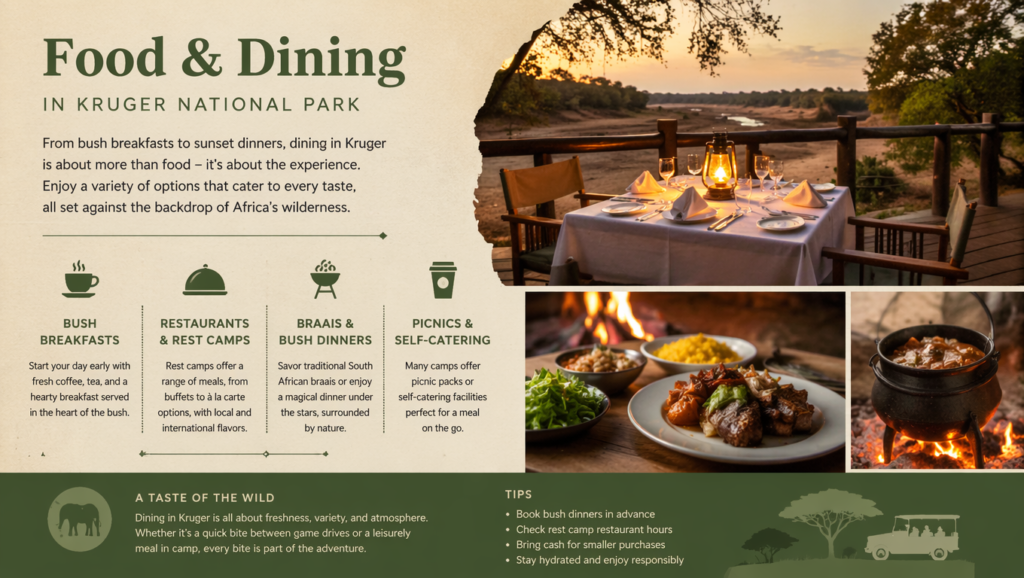
A safari isn’t just about wildlife—it is also a chance to enjoy delicious South African cuisine. Kruger National Park offers everything from casual cafés in rest camps to fine dining at luxury safari lodges.
Many restaurants overlook rivers or open bush, allowing you to enjoy a meal while watching wildlife in the distance.
Popular Foods to Try
- Traditional South African Braai (Barbecue)
- Boerewors (South African Sausage)
- Biltong (Dried Meat Snack)
- Bobotie
- Grilled Steak
- Fresh Seafood (Available in Some Lodges)
- Homemade Pies
- Malva Pudding
- Local Cheeses
- Seasonal Fresh Fruit
Dining Tips
✔ Reserve dinner early at luxury lodges.
✔ Carry snacks during long game drives.
✔ Drink plenty of water throughout the day.
✔ Respect wildlife by never feeding animals.
Best Restaurants Around Kruger National Park
While many visitors eat inside the park, nearby towns also offer excellent dining options.
| Restaurant Type | Best For |
| Safari Lodge Restaurant | Romantic dinners |
| Camp Restaurant | Affordable meals |
| Bush Breakfast | Unique safari experience |
| Outdoor Braai | Family gatherings |
| Local Cafés | Traditional South African food |
Nightlife Near Kruger National Park
Kruger is about nature rather than nightlife. However, evenings offer unforgettable experiences that are far more memorable than crowded bars.
Popular evening activities include:
- Campfire storytelling
- Bush dinners
- Stargazing
- Night safari drives
- Wildlife talks by guides
- Traditional cultural performances at some lodges
The peaceful sounds of lions roaring in the distance often become the highlight of the night.
Shopping Around Kruger National Park
Visitors can purchase authentic African souvenirs inside the park and in nearby towns.
Popular Souvenirs
- Handmade Wood Carvings
- African Artwork
- Wildlife Books
- Safari Hats
- Handmade Jewelry
- Local Coffee
- Traditional Fabrics
- Magnets
- Postcards
- Photography Prints
Buying locally made products helps support surrounding communities and local artisans.
Safety Tips for Visiting Kruger National Park
Kruger is considered one of Africa’s safest safari destinations when visitors follow park regulations.
Essential Safety Rules
- Never leave your vehicle outside designated areas.
- Keep windows only partially open around predators.
- Drive slowly and carefully.
- Stay alert at all times.
- Never feed wildlife.
- Maintain a safe distance from all animals.
- Follow park speed limits.
- Listen to ranger instructions.
- Avoid walking around camps after dark unless permitted.
- Carry a fully charged mobile phone.
Warning Box
⚠️ Wild animals are unpredictable.
Even elephants, giraffes, and zebras can become dangerous if they feel threatened. Always respect wildlife and maintain a safe distance.
Family Travel Guide
Kruger National Park is an excellent destination for families, especially children who love animals and nature.
Family-Friendly Activities
- Easy self-drive safaris
- Junior ranger programs (where available)
- Wildlife education centers
- Picnic areas
- Birdwatching
- Swimming pools at some rest camps
- Scenic viewpoints
Family Travel Tips
- Choose shorter game drives for young children.
- Bring binoculars for each child.
- Pack snacks and drinks.
- Download wildlife identification apps.
- Turn animal spotting into a fun game.
Solo Travel Guide
Solo travelers often find Kruger welcoming and easy to navigate.
Why Solo Travelers Love Kruger
- Safe tourist infrastructure
- Guided safari options
- Friendly camp atmosphere
- Excellent photography opportunities
- Easy self-drive routes
Solo visitors frequently meet fellow wildlife enthusiasts during guided drives and evening activities.
Couples Guide
Kruger National Park is one of Africa’s most romantic destinations.
Imagine watching elephants at sunset, dining under the stars, or waking up to birds singing outside your safari suite.
Romantic Experiences
- Private game drives
- Luxury safari lodges
- Couples spa treatments
- Bush breakfasts
- Candlelit dinners
- Sunset viewpoints
- Stargazing experiences
Hidden Wildlife Experiences
Some of the most unforgettable safari moments happen unexpectedly.
Keep an eye out for:
- Leopard cubs playing in trees
- Baby elephants learning to use their trunks
- Lions resting after an early morning hunt
- Hippos fighting for territory
- Birds building nests
- Wild dogs hunting in packs
- Crocodiles basking on riverbanks
Patience is often rewarded with extraordinary encounters.
Best Photography Spots
Kruger National Park offers endless opportunities for incredible wildlife and landscape photography.
Top Photography Locations
| Location | Best Subject |
| Lower Sabie | Lions and rivers |
| Satara | Big cats |
| Letaba | Elephants |
| Pafuri | Birds |
| Crocodile Bridge | Sunrise |
| Mlondozi Dam | Scenic landscapes |
| Nkuhlu Picnic Site | River wildlife |
| Skukuza Area | Mixed wildlife |
Photography Tips
✔ Shoot during golden hour.
✔ Keep your camera ready.
✔ Use a telephoto lens for wildlife.
✔ Focus on animal behavior.
✔ Be patient.
✔ Respect wildlife and never encourage animals to approach.
Best Day Trips Near Kruger National Park
If you have extra time, explore attractions surrounding the park.
Popular Day Trips
Panorama Route
One of South Africa’s most scenic drives, featuring dramatic cliffs, waterfalls, and breathtaking viewpoints.
Blyde River Canyon
The third-largest canyon in the world and one of Africa’s most spectacular natural wonders.
God’s Window
Offers sweeping panoramic views across forests and valleys.
Bourke’s Luck Potholes
Unique rock formations created by centuries of flowing water.
Local Cultural Villages
Learn about the traditions, history, music, and crafts of local communities.
Suggested 5-Day Kruger National Park Itinerary
| Day | Activities |
| Day 1 | Arrive, afternoon self-drive safari, sunset |
| Day 2 | Sunrise safari, picnic lunch, evening game drive |
| Day 3 | Guided walking safari, photography, bush dinner |
| Day 4 | Explore northern Kruger, birdwatching, scenic drive |
| Day 5 | Final sunrise safari, souvenir shopping, departure |
Local Insider Tips
Experienced safari travelers recommend:
- Leave camp as soon as gates open.
- Stop whenever you see other vehicles safely parked—there may be wildlife nearby.
- Listen for alarm calls from birds and antelope, which often signal predators.
- Carry binoculars even if you have a camera.
- Keep conversations quiet during wildlife sightings.
- Spend time at waterholes instead of constantly driving.
- Always watch the trees—leopards often rest in branches.
Common Travel Mistakes to Avoid
Even experienced travelers can make avoidable mistakes.
Avoid These Errors
❌ Sleeping in and missing sunrise drives.
❌ Driving too fast.
❌ Visiting for only one day.
❌ Forgetting sunscreen.
❌ Not carrying enough drinking water.
❌ Ignoring weather forecasts.
❌ Booking accommodation too late.
❌ Making excessive noise near wildlife.
❌ Expecting guaranteed Big Five sightings immediately.
❌ Leaving your camera packed away.
Packing Checklist for Kruger National Park
Clothing
- Neutral-colored shirts
- Comfortable shorts
- Lightweight trousers
- Warm jacket for winter mornings
- Comfortable walking shoes
- Hat
- Sunglasses
Safari Essentials
- Binoculars
- Camera
- Extra batteries
- Power bank
- Sunscreen
- Insect repellent
- Reusable water bottle
- First-aid kit
- Flashlight
- Travel adapter
Pro Tip: Pack clothing in neutral shades such as khaki, olive, brown, or beige to blend into the natural environment and reduce disturbance to wildlife.
Frequently Asked Questions
What are the best things to do in Kruger National Park?
The best Things to Do in Kruger National Park include going on sunrise and sunset game drives, spotting the Big Five, joining a guided walking safari, taking a self-drive safari, visiting scenic picnic areas, staying at a luxury safari lodge, birdwatching, wildlife photography, exploring hidden roads, and enjoying a night safari. Most visitors spend at least three to five days in the park to fully experience its diverse landscapes and abundant wildlife.
How many days should I spend in Kruger National Park?
A stay of three to five days is ideal for most travelers. This allows enough time to explore different regions of the park, increase your chances of seeing the Big Five, enjoy guided and self-drive safaris, and experience sunrise and sunset game drives. If you’re passionate about wildlife photography or birdwatching, spending a full week offers an even richer and more relaxed safari experience.
Is Kruger National Park safe for tourists?
Yes, Kruger National Park is considered one of Africa’s safest safari destinations when visitors follow park rules. Stay inside your vehicle except in designated areas, obey speed limits, avoid approaching wildlife, and follow instructions from park staff and guides. By respecting these guidelines, millions of visitors safely enjoy the park every year while experiencing incredible wildlife encounters.
Can I drive myself through Kruger National Park?
Absolutely. Kruger is one of the few major African safari parks where self-driving is both popular and easy. The roads are well maintained, clearly signposted, and suitable for most rental vehicles. A self-drive safari allows you to travel at your own pace, stop for wildlife sightings, and create a flexible itinerary while keeping travel costs lower than fully guided tours.
When is the best time to visit Kruger National Park?
The dry season, from May to September, is generally the best time for wildlife viewing because animals gather around rivers and waterholes, making them easier to spot. The green season, from October to April, offers lush scenery, excellent birdwatching, dramatic landscapes, and opportunities to see newborn animals. Both seasons provide unique safari experiences depending on your interests.
Can I see the Big Five in one visit?
Yes, many visitors successfully see the Big Five—lion, leopard, elephant, rhinoceros, and buffalo—during a stay of three to five days. However, wildlife sightings are never guaranteed because animals roam freely throughout the park. Patience, early morning drives, and spending time near waterholes significantly improve your chances of seeing all five iconic species.
Is Kruger National Park suitable for families?
Yes. Kruger is an excellent destination for families with children. Many rest camps provide family-friendly accommodations, restaurants, swimming pools, picnic areas, and educational activities. Children often enjoy spotting animals, learning about conservation, and participating in ranger-led experiences where available. Families should plan shorter game drives, pack snacks, and take regular breaks to keep younger travelers comfortable.
What animals can I see besides the Big Five?
Kruger National Park is home to an astonishing variety of wildlife beyond the Big Five. Visitors commonly see giraffes, zebras, cheetahs, hippos, crocodiles, hyenas, African wild dogs, warthogs, baboons, monkeys, wildebeest, impalas, kudus, and more than 500 bird species. Every safari drive is different, making each visit exciting and unpredictable.
What should I pack for a safari in Kruger National Park?
Pack lightweight neutral-colored clothing, comfortable walking shoes, a warm jacket for chilly mornings, a wide-brimmed hat, sunglasses, sunscreen, insect repellent, binoculars, a camera with extra batteries, memory cards, a reusable water bottle, and a small first-aid kit. These essentials will help you stay comfortable and prepared throughout your safari adventure.
Is Kruger National Park worth visiting?
Without question. Kruger National Park is one of the world’s premier safari destinations, offering incredible wildlife, breathtaking landscapes, excellent infrastructure, and experiences suitable for every budget. Whether you’re hoping to photograph the Big Five, enjoy a luxury lodge, or simply experience Africa’s natural beauty, Kruger delivers unforgettable memories that last a lifetime.
Conclusion
Kruger National Park is far more than a wildlife reserve—it’s a destination where every sunrise brings new discoveries and every safari drive tells a different story. From thrilling encounters with the Big Five and peaceful birdwatching sessions to scenic drives and unforgettable sunsets, the park offers experiences that appeal to nature lovers, photographers, families, couples, and solo travelers alike.
Whether you’re planning your very first African safari or returning for another adventure, the wide variety of Things to Do in Kruger National Park ensures that no two visits are ever the same. With thoughtful planning, respect for nature, and a spirit of adventure, you’ll leave with incredible memories, stunning photographs, and a deeper appreciation for one of Africa’s greatest natural treasures.
Internal Linking Suggestions
To strengthen your travel website’s SEO, consider linking this article to these related topics:
- Best National Parks in South Africa
- Best Safari Destinations in Africa
- Ultimate Cape Town Travel Guide
- Garden Route Road Trip Itinerary
- Best Time to Visit South Africa
- Things to Do in Johannesburg
- Table Mountain Visitor Guide
- South Africa Travel Tips for First-Time Visitors
- Best Wildlife Photography Destinations
- Luxury Safari Lodges in Africa
External Authority Source Suggestions
For accurate and up-to-date travel information, refer readers to:
- South African National Parks (SANParks)
- South African Tourism
- South African Department of Home Affairs (Visa Information)
- International Air Transport Association (IATA)
- World Health Organization (WHO)
- Centers for Disease Control and Prevention (CDC)
- UNESCO World Heritage Centre
- Lonely Planet
- National Geographic Travel
- BirdLife South Africa
Featured Image SEO
Featured Image Prompt
A breathtaking sunrise over Kruger National Park with a herd of elephants walking across the golden savanna, a lion resting in the foreground, giraffes in the distance, vibrant African sky, realistic wildlife photography, ultra-detailed, cinematic lighting, 8K travel magazine style.
Image File Name
things-to-do-in-kruger-national-park.webp
ALT Text
Elephants and lions during sunrise in Kruger National Park South Africa
Image Title
Things to Do in Kruger National Park
Image Caption
A spectacular sunrise safari showcasing the incredible wildlife of Kruger National Park.
Additional Image Prompts
Big Five Safari
Prompt: Realistic African safari jeep observing lions, elephants, buffalo, leopard, and rhinoceros in Kruger National Park, golden evening light, highly detailed, travel photography style.
File Name: kruger-big-five-safari.webp
ALT: Safari vehicle viewing the Big Five in Kruger National Park.
Title: Big Five Safari Experience
Caption: Spot Africa’s famous Big Five during a safari in Kruger.
Luxury Safari Lodge
Prompt: Luxury safari lodge overlooking the African savanna with infinity pool, sunset, elephants nearby, elegant outdoor dining, ultra-realistic.
File Name: luxury-safari-lodge-kruger.webp
ALT: Luxury safari lodge inside Kruger National Park.
Title: Luxury Safari Accommodation
Caption: Relax in comfort after an exciting day of wildlife viewing.
Leopard in Tree
Prompt: Wild leopard resting on a tree branch in Kruger National Park during golden hour, ultra-realistic wildlife photography.
File Name: leopard-kruger-national-park.webp
ALT: Leopard resting in a tree in Kruger National Park.
Title: Leopard Safari
Caption: Leopards are among Kruger’s most sought-after wildlife sightings.
Birdwatching
Prompt: Colorful lilac-breasted roller perched on a tree branch with blurred African landscape in the background, vibrant colors, realistic photography.
File Name: kruger-birdwatching.webp
ALT: Colorful bird in Kruger National Park.
Title: Birdwatching in Kruger
Caption: Kruger is home to more than 500 bird species.
Sunset Safari
Prompt: Safari vehicle driving across the African savanna during a dramatic sunset with silhouettes of giraffes, realistic, cinematic lighting.
File Name: kruger-sunset-safari.webp
ALT: Sunset safari in Kruger National Park.
Title: Sunset Safari Adventure
Caption: End your safari with unforgettable African sunset views.
Schema Markup Suggestions
Recommended Schema Types
- Article Schema – For the main travel guide.
- FAQPage Schema – To display the FAQs in rich search results.
- BreadcrumbList Schema – To improve navigation and search visibility.
- ImageObject Schema – For featured and supporting images.
- TouristDestination Schema – To describe Kruger National Park.
- Place Schema – For park locations and points of interest.
- Review Schema (only if genuine reviews are added).
- VideoObject Schema (if you embed safari videos).
Related Keywords
- Kruger National Park Safari
- Kruger National Park Travel Guide
- Best Time to Visit Kruger
- South Africa Wildlife Safari
- Big Five Safari
- Kruger Self-Drive Safari
- Kruger National Park Hotels
- Kruger National Park Itinerary
- Kruger Wildlife Photography
- African Safari Vacation
- South Africa National Parks
- Kruger Game Drives
- Luxury Safari South Africa
- Kruger Birdwatching
- Family Safari South Africa
Best Time to Visit Vietnam: Complete Travel Guide for Every Season (2026)