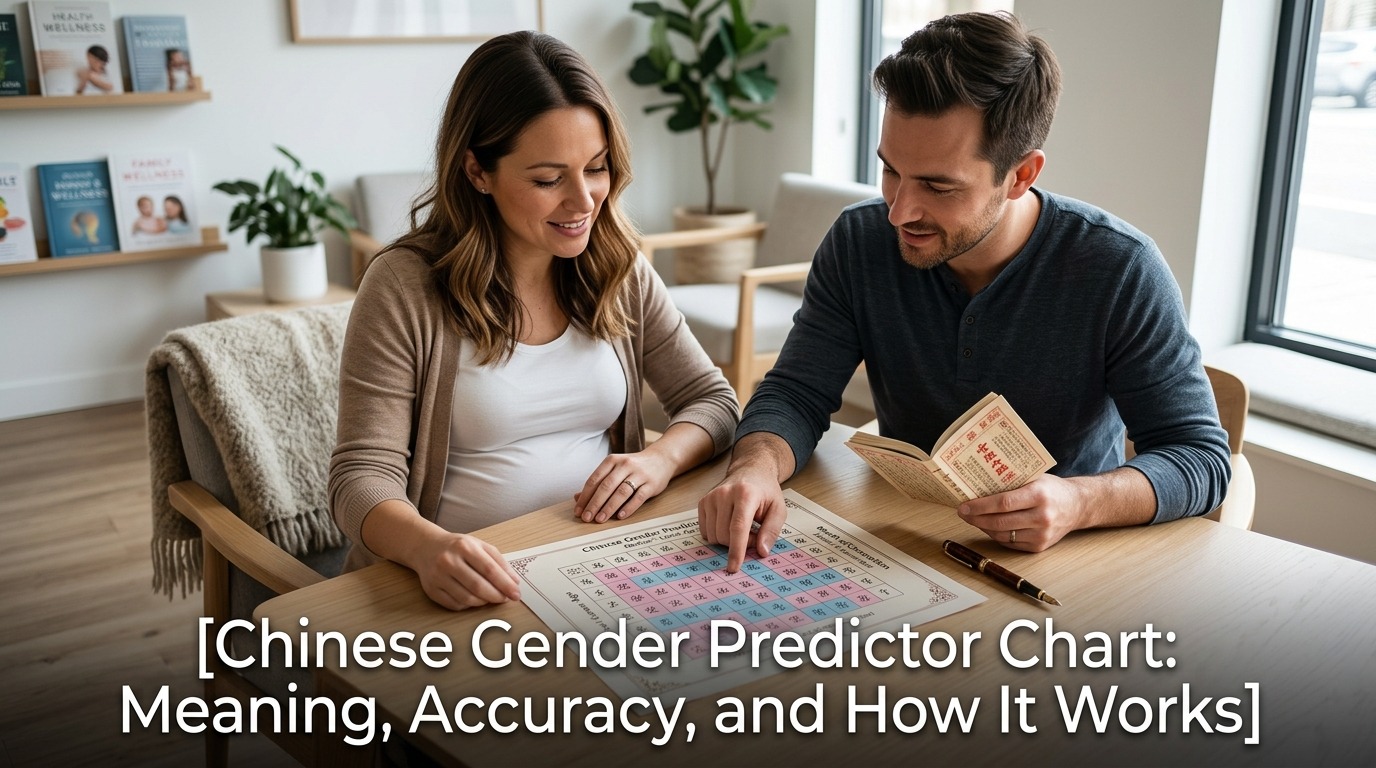
Direct Answer: The Chinese Gender Predictor Chart is a traditional Chinese method that claims to predict a baby’s gender using the mother’s lunar age and the month of conception. Many people use it for fun or curiosity during pregnancy planning, but it is not scientifically proven and should not be considered a medical tool.
The Chinese Gender Predictor Chart has become one of the most searched pregnancy-related topics in the United States. Expecting parents often look for fun ways to guess whether they may be having a boy or a girl before an ultrasound appointment. This ancient chart is widely shared on parenting websites, social media platforms, and pregnancy forums.
Although many people enjoy using the chart, it is important to understand what it actually is. The chart is based on traditional Chinese beliefs rather than modern medical science. Some users report that it predicted their baby’s gender correctly, while others say it did not. As a result, most experts view it as entertainment rather than a reliable prediction method.
In this comprehensive guide, you’ll learn what the Chinese Gender Predictor Chart means, how it works, its history, common uses, benefits, limitations, and frequently asked questions. By the end, you’ll have a clear understanding of why this chart remains popular among parents-to-be.
What Does Chinese Gender Predictor Chart Mean?
The Chinese Gender Predictor Chart, sometimes called the Chinese Baby Gender Chart or Chinese Gender Calendar, is a chart that matches two pieces of information:
- The mother’s lunar age
- The lunar month of conception
According to traditional belief, the combination of these two factors predicts whether the baby will be a boy or a girl.
Many versions of the chart exist online, but they generally follow the same concept. Users locate the mother’s lunar age on one side of the chart and the conception month on the other side. The intersecting box shows the predicted gender.
Historical Background
Stories about the chart’s origin vary. A popular legend claims that it was discovered in a royal tomb in China hundreds of years ago and was used by the imperial family to plan male heirs. However, historians have found limited evidence supporting this story.
Despite the uncertain origin, the chart has remained popular across generations and continues to attract millions of online searches every year.
How Does the Chinese Gender Predictor Chart Work?
The chart uses lunar calculations instead of the standard Gregorian calendar used in the United States.
Basic Formula
- Step 1: Determine the mother’s lunar age.
- Step 2: Determine the lunar month when conception occurred.
- Step 3: Find the intersection on the chart.
- Step 4: Read the predicted result: Boy or Girl.
Example
Suppose a woman’s lunar age is 28 and she conceived in the 6th lunar month. The chart may predict Boy or Girl, depending on the specific chart version used.
Important
This is only a traditional prediction.
The result does not determine the actual biological sex of the baby.
Lunar Age vs. Western Age

One reason people get different results is that the chart uses Chinese lunar age, which is often 1–2 years different from a person’s Western age.
Age Comparison Table
| Western Age | Possible Lunar Age |
| 25 | 26–27 |
| 30 | 31–32 |
| 35 | 36–37 |
| 40 | 41–42 |
This difference can significantly change the chart’s prediction.
Types or Categories of Chinese Gender Predictor Charts
Several versions of the chart are available online.
1. Traditional Lunar Chart
Uses lunar age and lunar conception month.
2. Simplified Online Calculator
Automatically converts Western dates into lunar dates.
3. Printable Gender Chart
A visual table that users can check manually.
4. Pregnancy App Versions
Many pregnancy apps include a built-in Chinese gender predictor feature.
Common Uses of the Chinese Gender Predictor Chart
People use the chart for several reasons.
Most Common Uses
- Pregnancy fun: Guessing the baby’s gender before an ultrasound.
- Gender reveal planning: Adding excitement to family events.
- Family discussions: Comparing predictions with relatives.
- Social media sharing: Posting predicted results online.
- Curiosity: Seeing whether the chart matches the actual outcome.
Benefits of Using the Chart
Fun and entertaining
Many families enjoy guessing the baby’s gender together.
Easy to use
Only two pieces of information are needed.
Creates excitement
Can make pregnancy announcements more engaging.
Cultural interest
Introduces users to traditional Chinese beliefs.
Limitations and Accuracy
Important Limitations
- It is not scientifically validated.
- Different chart versions may give different predictions.
- Lunar date conversions can be confusing.
- It should not replace medical advice.
- Its accuracy is generally considered similar to random guessing.
What Do Medical Experts Say?

Doctors and medical organizations do not recognize the Chinese Gender Predictor Chart as a reliable method for determining fetal sex. The most accurate prenatal methods include:
- Ultrasound
- Non-invasive prenatal testing (NIPT)
- Diagnostic genetic tests
Chinese Gender Predictor vs. Medical Methods
Comparison Table
| Method | Scientific? | Typical Accuracy |
| Chinese Gender Predictor Chart | No | About 50% |
| Ultrasound (18–20 weeks) | Yes | 90–99% |
| NIPT Blood Test | Yes | 99%+ |
| Genetic Diagnostic Testing | Yes | Nearly 100% |
Real-World Examples
Example 1: Family Gender Guessing Game
A pregnant woman in Texas used the chart during a family gathering. The chart predicted a girl, but the ultrasound later showed a boy. The family still enjoyed the guessing game.
Example 2: Social Media Trend
Many TikTok and Instagram users compare their chart prediction with their actual baby’s gender. These posts often generate significant engagement because people enjoy testing the chart’s accuracy.
Example 3: Pregnancy Planning Forums
Some couples use the chart while trying to conceive, hoping to predict or influence the gender of a future child. However, there is no scientific evidence that the chart can influence conception outcomes.
Other Meanings of Chinese Gender Predictor Chart
Although the Chinese Gender Predictor Chart usually refers to the traditional lunar chart used to predict a baby’s sex, you may also come across similar names online. Understanding these terms can help you avoid confusion.
Chinese Baby Gender Chart
This is the most common alternative name. It refers to the same traditional chart that uses the mother’s lunar age and the lunar month of conception.
Chinese Gender Calendar
Many websites use “Chinese Gender Calendar” instead of “Chinese Gender Predictor Chart.” In most cases, they are identical and provide the same prediction method.
Chinese Pregnancy Calendar
Some pregnancy blogs use this broader term to describe calendars that include the gender chart along with pregnancy milestones and due-date information.
Online Chinese Gender Calculator
Instead of reading a printed chart, users enter their birth date and conception date into an online calculator. The calculator converts the dates into the Chinese lunar calendar automatically and displays the predicted gender.
Expert Tips for Using the Chinese Gender Predictor Chart
If you want to try the chart, keep these practical tips in mind.
Treat It as Entertainment
The chart is best viewed as a fun pregnancy activity rather than a scientific prediction tool.
Use the Correct Lunar Age
Many incorrect predictions happen because people use their Western age instead of their Chinese lunar age.
Confirm the Conception Month Carefully
The conception month, not the baby’s due date or birth month, is what matters. If you’re unsure of the conception date, the prediction may be inaccurate.
Compare Multiple Methods
For fun, compare the chart’s prediction with old wives’ tales, family guesses, and eventually your ultrasound results.
Don’t Make Important Decisions Based on the Chart
Medical care, baby planning, and health decisions should always rely on qualified healthcare professionals rather than traditional prediction methods.
Understand Its Cultural Value
The chart reflects traditional Chinese culture and folklore. Appreciating its history can make using it even more enjoyable.
Expect Mixed Results
Some families find that the chart predicts correctly, while others do not. This variation is one reason experts do not consider it a reliable diagnostic tool.
Frequently Asked Questions
Is the Chinese Gender Predictor Chart accurate?
There is no scientific evidence that the chart accurately predicts a baby’s gender. Its success rate is generally considered to be close to random chance.
How does the Chinese Gender Predictor Chart work?
It combines the mother’s Chinese lunar age with the lunar month of conception to predict whether the baby will be a boy or a girl.
Is the Chinese Gender Predictor Chart scientifically proven?
No. Medical researchers have not confirmed that the chart is a reliable method for predicting fetal sex.
Why do different websites show different results?
Different websites may use different lunar calendar conversions or different versions of the traditional chart, which can produce different predictions.
What is the difference between lunar age and actual age?
Your lunar age is calculated according to the traditional Chinese lunar calendar and may be one or two years higher than your Western age.
When can I know my baby’s actual gender?
Most parents learn the baby’s sex during the anatomy ultrasound, usually around 18 to 20 weeks of pregnancy. Blood tests such as NIPT can sometimes provide accurate results even earlier.
Can the chart help me choose my baby’s gender?
No. There is no scientific evidence that using the chart before conception can influence whether you will have a boy or a girl.
Why is the Chinese Gender Predictor Chart so popular?
It is simple, free, easy to use, and adds excitement to pregnancy. Many families enjoy comparing the prediction with the baby’s actual gender.
Is it safe to use the chart during pregnancy?
Yes. Since it is only a traditional prediction tool and does not involve any medical procedure, using it for entertainment is completely harmless.
Should I rely on the chart instead of an ultrasound?
No. Ultrasounds and other medical tests are the appropriate methods for determining a baby’s biological sex and monitoring fetal health.
Also Read;
Why Are Banks Closed Today? Common Reasons, Bank Holidays, and What You Should Know
Conclusion
The Chinese Gender Predictor Chart has remained popular for generations because it combines tradition, curiosity, and the excitement of pregnancy. By using the mother’s lunar age and the lunar month of conception, it offers a simple prediction of whether a baby may be a boy or a girl. While many families enjoy trying it, the chart should be viewed as a cultural tradition and a source of entertainment rather than a medically accurate test.
If you’re expecting a baby, the chart can be a fun way to involve friends and family in the journey. However, for reliable information about your baby’s sex and overall health, always depend on qualified healthcare providers and medical examinations such as ultrasounds or prenatal genetic testing. Enjoy the tradition, but let science guide your important pregnancy decisions.