
Juneteenth 2026 is one of the most meaningful holidays in the United States. Every year on June 19, Americans come together to recognize the end of slavery and celebrate freedom, resilience, and the achievements of African Americans. The holiday serves as both a celebration and a reminder of the nation’s history, encouraging reflection on progress while acknowledging the work that still remains.
As awareness of Juneteenth continues to grow, more schools, businesses, government offices, and communities are participating in educational programs, festivals, volunteer events, and cultural celebrations. Whether you are learning about the holiday for the first time or planning to participate in local events, understanding the history and significance of Juneteenth 2026 helps create a deeper appreciation for America’s journey toward equality.
What Does Juneteenth 2026 Mean?
Juneteenth is a combination of the words “June” and “Nineteenth.” It refers to June 19, 1865, when Union General Gordon Granger arrived in Galveston, Texas, and announced that enslaved African Americans were free under General Order No. 3.
Although President Abraham Lincoln signed the Emancipation Proclamation on January 1, 1863, many enslaved people in Texas remained unaware of their freedom because Confederate states had resisted enforcement. It was not until Union troops reached Texas after the Civil War that freedom was officially announced.
Today, Juneteenth symbolizes:
- Freedom
- Equality
- Justice
- Hope
- Education
- Unity
- Cultural pride
- Reflection on American history
The holiday reminds Americans that freedom should be enjoyed by everyone regardless of race or background.
The History Behind Juneteenth
Understanding the history of Juneteenth makes its importance even clearer.
January 1, 1863
President Abraham Lincoln signed the Emancipation Proclamation, declaring enslaved people in Confederate states to be free.
April 1865
The Civil War ended with the defeat of the Confederacy.
June 19, 1865
Union soldiers arrived in Galveston, Texas.
General Gordon Granger announced:
“All slaves are free.”
This day became known as Juneteenth.
1866
The first Juneteenth celebrations took place in Texas through community gatherings, church services, music, and shared meals.
Following Decades
African American communities continued celebrating Juneteenth despite periods when it received little national attention.
June 17, 2021
President Joe Biden signed legislation making Juneteenth a federal holiday.
June 19, 2026
Americans across all 50 states are expected to celebrate Juneteenth through educational events, cultural festivals, parades, museum exhibits, concerts, family reunions, and volunteer activities.
Why Is Juneteenth Important?
Juneteenth is important because it represents much more than the end of slavery.
It reminds Americans about:
- The value of freedom
- The importance of equal rights
- African American history
- National unity
- Civil rights progress
- Respect for diversity
- Learning from history
The holiday encourages conversations about equality while celebrating the resilience and achievements of African Americans throughout history.
How Does Juneteenth 2026 Work?
Unlike holidays that commemorate a single celebration, Juneteenth combines remembrance, education, and community involvement.
Communities celebrate through activities such as:
Educational Programs
Schools, museums, and libraries organize lectures, exhibitions, and history workshops that teach the origins of Juneteenth and the broader history of slavery and civil rights.
Community Festivals
Many cities host festivals featuring:
- Live music
- Food vendors
- Local businesses
- Family entertainment
- Cultural performances
- Art exhibitions
Parades
Parades often include:
- Community organizations
- High school marching bands
- Veterans
- Local leaders
- Cultural groups
Volunteer Activities
Many Americans spend the holiday volunteering at food banks, community centers, youth organizations, and nonprofit groups.
Family Gatherings
Families often celebrate together by sharing traditional meals, discussing history, and passing stories to younger generations.
Types of Juneteenth Celebrations
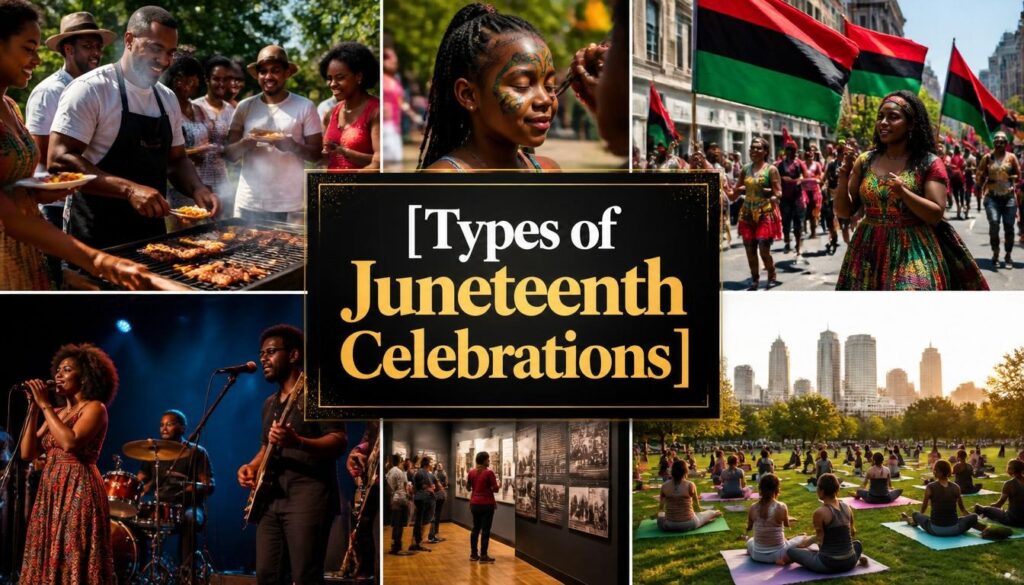
Although every community celebrates differently, most events fall into several categories.
Educational Celebrations
These focus on learning and historical understanding.
Examples include:
- Museum tours
- Documentary screenings
- Book discussions
- School presentations
- Historical lectures
Their purpose is to educate people about slavery, emancipation, and civil rights.
Cultural Celebrations
These highlight African American traditions.
Activities often include:
- Gospel music
- Jazz concerts
- Poetry readings
- Dance performances
- Storytelling
- Art exhibitions
These events celebrate creativity, culture, and heritage.
Community Events
Community celebrations encourage people of all backgrounds to participate together.
Popular activities include:
- Family picnics
- Local fairs
- Food festivals
- Charity walks
- Children’s games
- Health fairs
These gatherings strengthen community relationships while honoring the meaning of the holiday.
Government and Workplace Observances

Since Juneteenth is a federal holiday, many government offices close, and some private businesses also observe the day.
Employers may recognize Juneteenth by:
- Hosting diversity workshops
- Offering educational sessions
- Organizing volunteer opportunities
- Providing employees with the day off
- Supporting community events
These observances promote inclusion and awareness in the workplace.
Why Americans Celebrate Juneteenth Today
Modern Juneteenth celebrations have grown significantly because people increasingly recognise the importance of understanding American history.
The holiday encourages Americans to:
- Reflect on the nation’s past.
- Celebrate progress toward equality.
- Learn about African American contributions.
- Promote inclusion and respect.
- Support local communities.
- Inspire future generations through education.
Rather than focusing only on historical events, Juneteenth also highlights hope, resilience, and the ongoing commitment to building a more equal society.
Key Facts About Juneteenth 2026
| Feature | Details |
| Holiday Name | Juneteenth National Independence Day |
| Date in 2026 | Friday, June 19, 2026 |
| Country | United States |
| Type | Federal Holiday |
| First Celebration | 1866 |
| Federal Holiday Since | 2021 |
| Main Purpose | Celebrate the end of slavery |
| Common Activities | Festivals, parades, education, volunteer work, family gatherings |
Common Uses of Juneteenth 2026
Although Juneteenth 2026 is a federal holiday, it is also widely used as an opportunity for education, cultural appreciation, and community engagement. Across the United States, individuals, schools, businesses, and organizations observe the day in meaningful ways.
Learning About American History
Many schools, colleges, libraries, and museums organize educational programs to teach the history of slavery, the Civil War, and the Civil Rights Movement. Students gain a better understanding of the struggles and achievements that shaped the nation.
Community Celebrations
Cities and towns host festivals, concerts, parades, and cultural fairs that bring people together. These events often feature local artists, musicians, speakers, and food vendors while celebrating African American heritage.
Family Gatherings
Families use Juneteenth as an opportunity to reunite, share meals, tell stories, and pass historical knowledge to younger generations.
Workplace Diversity Programs
Many businesses recognize Juneteenth by hosting diversity, equity, and inclusion (DEI) workshops, educational seminars, volunteer events, or giving employees paid time off.
Volunteer and Charity Work
Community members often volunteer at food banks, youth organizations, shelters, and nonprofit groups, using the holiday as a day of service.
Benefits of Juneteenth 2026
Juneteenth provides many educational, cultural, and social benefits for individuals and communities.
Promotes Historical Awareness
The holiday encourages Americans to learn about important events in U.S. history that may not always receive enough attention.
Celebrates Freedom
Juneteenth honors the freedom of formerly enslaved people and reminds everyone of the importance of liberty and equal rights.
Encourages Unity
People from different backgrounds come together to celebrate shared values such as justice, equality, and respect.
Supports Local Communities
Festivals and public events help local businesses, artists, musicians, and nonprofit organizations.
Inspires Future Generations
Young people learn valuable lessons about perseverance, courage, leadership, and civic responsibility.
Highlights African American Culture
Music, food, literature, art, and traditions are celebrated and shared with wider audiences.
Limitations of Juneteenth
Although Juneteenth is widely celebrated, there are still some challenges.
Limited Historical Knowledge
Many Americans are still unfamiliar with the history and significance of Juneteenth.
Different Levels of Participation
Not every business or organization observes the holiday, and participation varies by state and employer.
Commercialization
Some people worry that excessive commercial marketing can distract from the holiday’s historical importance.
Ongoing Social Challenges
While Juneteenth celebrates freedom, discussions about equality and civil rights continue, reminding Americans that progress requires continued effort.
Comparison Table
| Feature | Juneteenth | Independence Day |
| Date | June 19 | July 4 |
| Honors | End of slavery in the U.S. | U.S. independence from Great Britain |
| First Celebrated | 1866 | 1777 |
| Federal Holiday | Yes | Yes |
| Main Theme | Freedom, equality, justice | National independence and patriotism |
| Common Activities | Festivals, education, parades, cultural events | Fireworks, parades, barbecues, concerts |
Real-World Examples
Local Festivals
Cities such as Houston, Atlanta, Chicago, Washington, D.C., and Philadelphia host large Juneteenth festivals featuring live music, cultural performances, educational exhibits, and family-friendly activities.
Museums
Museums across the United States organize special exhibitions that explore African American history, slavery, emancipation, and the Civil Rights Movement.
Schools
Teachers use Juneteenth as an opportunity to introduce students to historical documents, biographies of influential leaders, and classroom discussions about freedom and equality.
Businesses
Many companies encourage employees to participate in volunteer activities or educational workshops that promote diversity and inclusion.
Community Organizations
Nonprofit organizations often organize scholarship drives, health fairs, food distributions, and youth mentoring events in honor of Juneteenth.
Other Meanings of Juneteenth
The term Juneteenth specifically refers to the holiday commemorating the end of slavery in the United States. However, it is also commonly known by several related names:
- Juneteenth National Independence Day
- Freedom Day
- Emancipation Day (in some communities)
- Black Independence Day
- Liberation Day (informal usage)
While the names may vary, they all celebrate freedom and recognise a significant moment in American history.
Expert Tips for Observing Juneteenth 2026
If you want to celebrate Juneteenth in a meaningful way, consider these practical tips:
- Learn about the history behind the holiday before attending events.
- Visit a local museum or historical site.
- Support Black-owned businesses in your community.
- Read books written by African American authors.
- Watch documentaries about slavery, emancipation, and civil rights.
- Attend a local parade, concert, or educational program.
- Volunteer with a nonprofit organization.
- Discuss the meaning of Juneteenth with family members and children.
- Share accurate historical information on social media.
- Reflect on the importance of equality, justice, and inclusion.
Frequently Asked Questions (FAQs)
What is Juneteenth 2026?
Juneteenth 2026 is a U.S. federal holiday observed on Friday, June 19, 2026, celebrating the end of slavery in the United States and honoring African American freedom and history.
Why is Juneteenth celebrated on June 19?
It marks the day in 1865 when Union General Gordon Granger announced in Galveston, Texas, that enslaved African Americans were free.
Is Juneteenth a federal holiday?
Yes. Juneteenth became an official federal holiday in 2021.
Are banks and government offices closed on Juneteenth?
Most federal government offices are closed. Many banks and businesses also observe the holiday, although schedules may vary.
How do people celebrate Juneteenth?
People celebrate with parades, educational events, cultural festivals, concerts, family gatherings, volunteer work, and community service.
Why is Juneteenth important?
It recognizes the end of slavery, celebrates freedom, and encourages education about American history and civil rights.
Can anyone celebrate Juneteenth?
Yes. Juneteenth is an inclusive holiday that welcomes everyone to learn, participate, and honor the values of freedom, equality, and unity.
What colors represent Juneteenth?
The red, white, and blue colors of the Juneteenth flag symbolize freedom for all Americans, while red foods and drinks are also common in many celebrations.
Conclusion
Juneteenth 2026 is much more than a federal holiday; it is a meaningful reminder of the long journey toward freedom, equality, and justice in the United States. By honoring June 19, 1865, Americans recognize the resilience of those who endured slavery and celebrate the progress made since that historic day.
As communities across the nation gather on Friday, June 19, 2026, Juneteenth offers an opportunity to learn from history, appreciate African American culture, support local communities, and inspire future generations. Whether you attend a festival, volunteer, visit a museum, or simply take time to reflect, participating in Juneteenth helps keep the values of freedom, unity, and equality alive.
Also Read;
Montenegro Travel Insurance: Complete Guide for American Travellers (2026)
Montenegro Food Guide: Traditional Dishes Every Traveller Should Try