
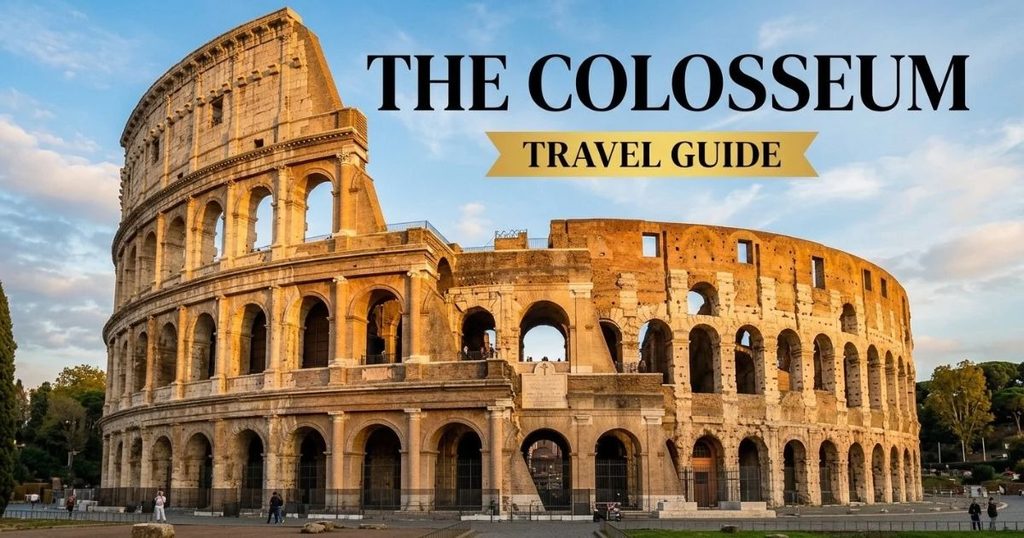
The Colosseum in Rome, Italy, is one of the world’s most recognizable historical landmarks, offering visitors a remarkable opportunity to explore the legacy of ancient Roman civilization. Located in the heart of Italy’s capital, this magnificent amphitheater has stood for nearly 2,000 years and remains a powerful symbol of Roman engineering, architecture, and public life. From the stories of gladiators and spectacular ancient games to the surviving stone arches and underground chambers, the monument offers much more than a memorable photograph. The Colosseum travel guide introduces the landmark’s history, architecture, and cultural significance, helping you understand why it remains one of the most important places to visit in Italy. Whether you are planning your first European holiday or returning to discover more of Rome, this guide will help you prepare for an enriching historical experience.
Planning ahead can make your visit more enjoyable, particularly when choosing tickets, checking seasonal opening hours, and deciding whether to explore independently or join a guided tour. Rome is also home to other remarkable attractions, including the Roman Forum, Palatine Hill, the Pantheon, and Vatican City, so organizing your itinerary can help you use your time wisely. This Colosseum travel guide explains how to reach the monument, compare ticket options, explore its most interesting areas, and prepare for the practical challenges of sightseeing. With advice on booking, transport, accessibility, photography, and nearby attractions, you can plan a memorable visit to one of Italy’s most celebrated historical treasures.
Colosseum Tickets: Prices, Types, and Booking Tips
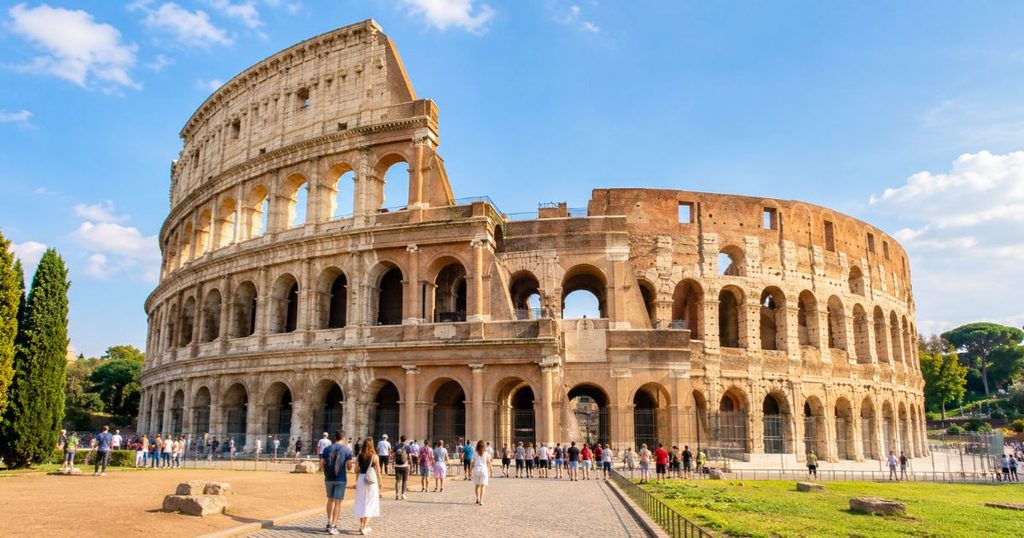
Buying the right ticket is one of the most important steps when planning a visit. The available options may include standard admission, combined tickets covering the Roman Forum and Palatine Hill, and special experiences that provide access to the arena floor, underground chambers, or upper levels. Each option offers a different experience, so compare the attractions included, the duration of access, and whether a guided tour is provided. When using this Colosseum travel guide to organize your visit, remember that ticket availability and entry conditions can vary by date.
How Much Do Colosseum Tickets Cost?
The official standard admission ticket for the Colosseum, Roman Forum, and Palatine Hill has been listed at €18 for full-price entry on the official ticket information page consulted for this article. A reduced fare of €2 has also been listed for eligible EU citizens aged 18 up to the day before their 25th birthday. Eligibility requirements and ticket inclusions apply, so check the latest official conditions before purchasing. Special experiences, guided tours, and tickets for restricted areas have different prices.
| Ticket option | What it offers | Best for |
| Standard admission | Access to the Colosseum and archaeological areas specified by the ticket | First-time visitors |
| Guided tour | Historical explanations from a knowledgeable guide | History enthusiasts |
| Arena floor experience | Access to a designated section of the arena when included | Visitors seeking a closer view |
| Underground experience | Access to selected underground areas under specific conditions | Travelers interested in ancient spectacles |
| Upper-level experience | Access to designated upper areas when available | Visitors seeking different viewpoints |
| Multi-attraction pass | Access or booking benefits for several attractions, depending on the provider | Travelers exploring multiple landmarks |
Ticket prices and inclusions can change. These options are general categories, not a guarantee that every experience will be available on your selected date.
Where Should You Buy Colosseum Tickets?
The official ticketing portal is the best starting point for checking current prices and availability: https://ticketing.colosseo.it/
The official park has stated that ticket sales generally open 30 days before the visit date, and the Colosseum requires a reserved entry time. Special experiences may have separate booking conditions.
Before completing your purchase:
- Select the correct date and entry time.
- Check whether the Roman Forum and Palatine Hill are included.
- Confirm whether arena or underground access is explicitly listed.
- Enter each visitor’s details accurately.
- Read the cancellation, refund, and ticket-change conditions.
- Save your ticket and booking confirmation on your phone.
Tickets are issued in the visitor’s name, and visitors should carry the required identification document. The official park has published additional restrictions on name changes for bookings dated from May 9, 2026. Check the latest rules before paying.
Is a Guided Tour Worth It?
A guided tour can be worthwhile if you want to understand the monument beyond its impressive appearance. A knowledgeable guide can explain how the seating was organized, why gladiatorial contests were held, and how underground spaces supported public spectacles.
Choose a guided experience if you:
- Enjoy learning about ancient history and Roman architecture.
- Want a structured route through the monument.
- Are interested in restricted areas available through specialist tours.
- Prefer explanations from a guide rather than reading information panels.
Independent visits are also a good option if you prefer exploring at your own pace. The official MyColosseum app has offered visitor information and interactive audio guides in Italian and English; check the current app details before your visit.
Colosseum Opening Hours and the Best Time to Visit
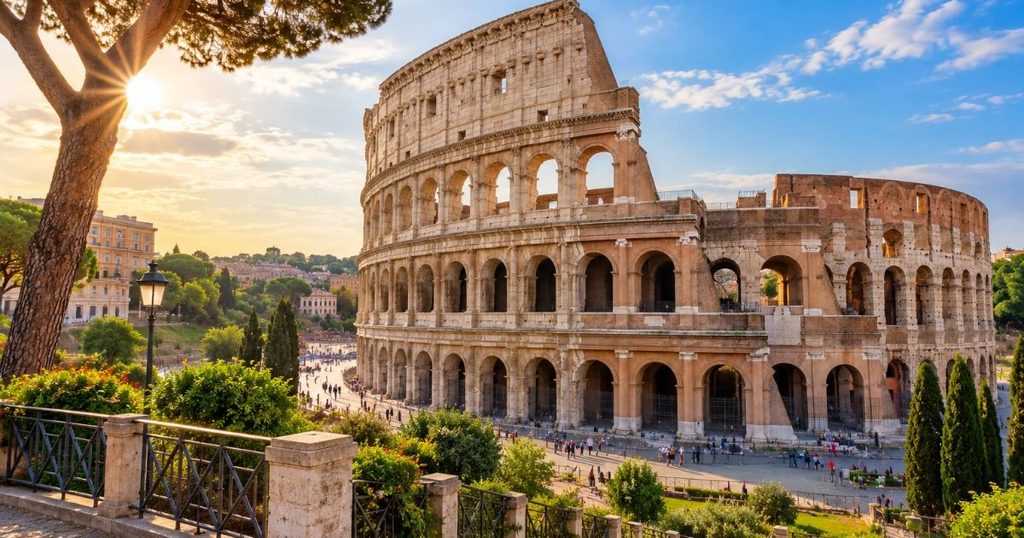
Opening hours change with the season, making it essential to check the official schedule for your exact date. The archaeological park generally opens the monument at 8:30 a.m., but closing times and last admission vary throughout the year. This Colosseum travel guide recommends confirming the schedule before finalizing your itinerary, particularly if you plan to visit other attractions on the same day.
Opening Hours for 2026–2027
The published autumn and winter schedule for 2026–2027 lists the following hours:
| Visit period | Opening hours | Last admission |
| October 1–24, 2026 | 8:30 a.m.–6:30 p.m. | 5:30 p.m. |
| October 25, 2026–February 28, 2027 | 8:30 a.m.–4:30 p.m. | 3:30 p.m. |
The published schedule lists December 25, 2026, and January 1, 2027, as closure dates. These hours are date-specific and may change because of special events, conservation work, or temporary restrictions. Confirm the official calendar before traveling.
What Is the Best Time of Day to Visit?
Early morning: An early time slot is a good choice if you want to begin sightseeing before the day becomes hotter. It can also leave more time for the Roman Forum and Palatine Hill.
Late morning: This can fit well into a city itinerary, but you may encounter more tour groups and warmer conditions.
Early afternoon: An afternoon visit may suit travelers with other morning plans, although summer heat can make outdoor sightseeing tiring.
Late afternoon: Softer light can be excellent for photography, but check the last admission time and leave enough time to explore.
Which Season Is Best for a Visit?
- Spring (March–May): Often comfortable for walking around the archaeological area, although popular dates can be busy.
- Summer (June–August): Longer daylight hours are convenient for sightseeing, but heat and crowds can be challenging.
- Autumn (September–November): A pleasant option for exploring Rome on foot, although weather conditions become more variable.
- Winter (December–February): Cooler temperatures and shorter opening hours require careful planning, but historical sightseeing can still be rewarding.
No season guarantees smaller crowds. Weekends, public holidays, school breaks, and special events can affect visitor numbers.
How to Get to the Colosseum in Rome, Italy
The monument stands at Piazza del Colosseo in central Rome and is easy to reach using public transportation. The nearest metro stop is Colosseo on Metro Line B. City buses and Tram Line 3 also serve the surrounding area, while visitors staying nearby can walk through Rome’s historic streets. For a smooth journey, this Colosseum travel guide recommends checking transport services before leaving your accommodation.
| Transport option | Best use | Travel tip |
| Metro Line B | Reaching the monument from other parts of Rome | Exit at Colosseo and follow the signs |
| City bus | Connecting from different neighborhoods | Check current routes and service updates |
| Tram Line 3 | Traveling along selected routes through Rome | Confirm the nearest stop to your starting point |
| Taxi | Convenient travel when carrying luggage or limiting walking | Use an authorized taxi |
| Walking | Exploring central Rome and nearby historic sites | Wear comfortable shoes and allow extra time |
Transport routes and services can change, so check current information before traveling.
Can You Walk to the Roman Forum and Palatine Hill?
Yes. The Roman Forum and Palatine Hill are part of the wider archaeological area, although entry points and ticket conditions vary. Many visitors explore the Colosseum first and then continue to the Forum and Palatine Hill.
Before leaving your accommodation:
- Check your entry time and the entrance stated on your ticket.
- Allow extra time for transport delays and security checks.
- Avoid carrying unnecessary luggage.
- Bring suitable weather protection and drinking water, following site rules.
- Review accessibility information if you need step-free routes or other assistance.
Official visitor information is available through the Colosseum Archaeological Park website.
What to See Inside the Colosseum: Main Attractions and Hidden Details
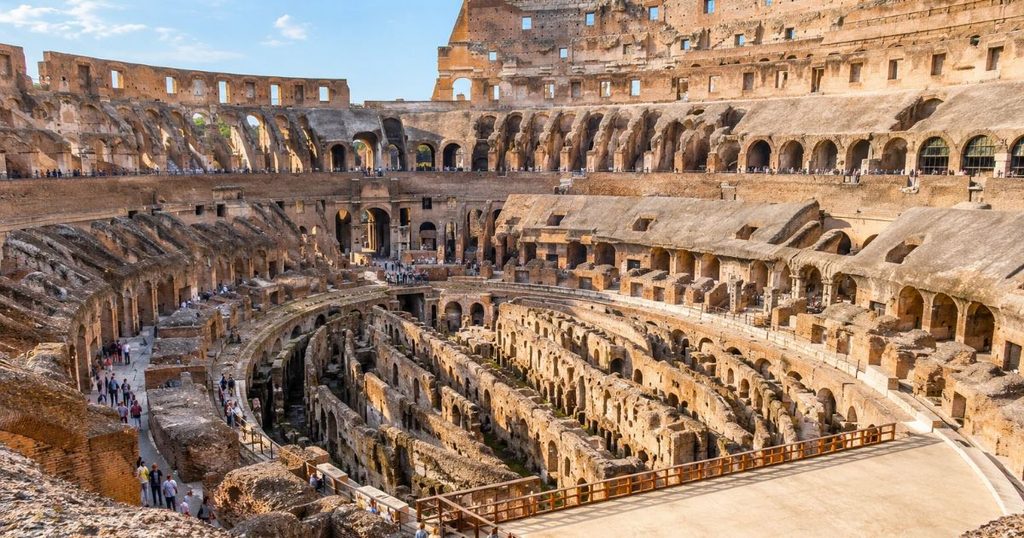
The Colosseum is much more than an impressive exterior. Its surviving corridors, viewing levels, arches, and exposed underground structures reveal how the ancient amphitheater was designed and used. Each accessible area offers a different perspective on Roman engineering and public entertainment. This Colosseum travel guide highlights the main areas worth exploring, although your route will depend on your ticket and any temporary restrictions.
The Colosseum’s Outer Walls
The surviving outer walls are among the most recognizable features of ancient Roman architecture. Their repeated arches, stone construction, and layered design show how builders created a vast structure for public gatherings. Walking around the exterior also reveals the contrast between preserved sections and areas lost through earthquakes and the reuse of building materials over the centuries.
The Spectator Levels
The seating levels provide views across the central arena and the monument’s enormous interior. The original seating arrangements reflected Roman social divisions, with places assigned according to status and position. From the accessible visitor levels, look at the oval shape of the arena and the corridors that helped people move through the building.
The Underground Hypogeum
The hypogeum is the network of underground passages and chambers beneath the arena. These spaces supported the organization of ancient spectacles, providing areas for equipment, animals, and performers. The system helped stage events and move people and objects toward the arena.
Underground access is not included with every ticket. Check the official booking page for the relevant experience, guided-tour requirements, and availability.
The Arena Floor
The arena was the central stage for gladiatorial contests, animal hunts, and other public spectacles. Some ticket options provide access to a designated arena-floor area, offering a closer view of the surrounding walls and underground remains. Standing in this space can help visitors appreciate the scale of the setting in which ancient events took place.
Museum Displays and Exhibitions
Museum displays and interpretive panels, where available, help explain the monument’s history, construction, and changing use. They add context to the physical remains by showing how the building functioned in Roman society and how its appearance changed over time. Exhibition content may vary, so check the official website for current information.
Visitor tip: Take time to read the display descriptions. Understanding the historical context can make the surrounding architecture more meaningful.
Can You Visit the Underground and Arena Floor?
Yes, but you need a ticket that specifically includes the relevant area. Underground and arena experiences may have limited availability, special entry arrangements, and guided-tour requirements. Do not assume that standard admission includes access to every part of the monument.
Before booking, confirm:
- Whether the underground chambers are included.
- Whether arena-floor access is included.
- The tour language and duration, if applicable.
- The designated meeting point and arrival time.
- Any current age, mobility, or safety requirements.
Colosseum History: How Ancient Rome Built Its Famous Amphitheater
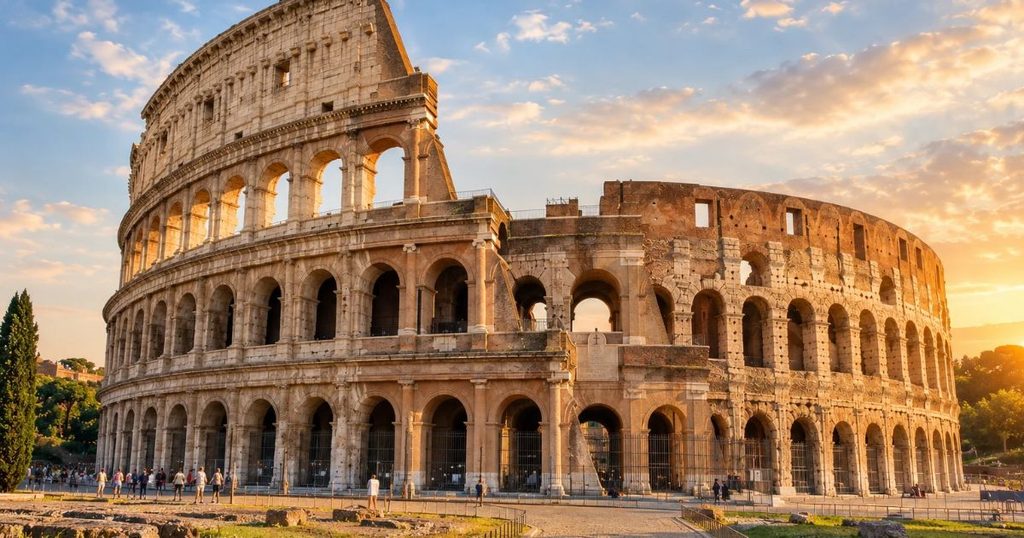
The Colosseum, originally known as the Flavian Amphitheatre, was built during the first century AD under the Flavian dynasty. Emperor Vespasian began the project around AD 70–72, and his son Titus inaugurated the monument around AD 80. Further construction and additions took place under Domitian. Its location in central Rome made it a major venue for public entertainment and a powerful symbol of imperial authority.
The amphitheater hosted gladiatorial contests, animal hunts, and other public spectacles. Its entrances, corridors, seating tiers, and backstage arrangements helped manage large crowds and organize events. The structure demonstrated Roman engineering and architectural skill, while the spectacles reflected the political, social, and cultural life of the empire.
Over the centuries, the Colosseum experienced earthquakes, changing uses, stone removal, and periods of neglect. A major earthquake in 1349 caused substantial damage, particularly to the southern side. The surviving structure was later protected and restored, and archaeological work continues to improve our understanding of its history. Today, it is one of Italy’s most important historical attractions and a major part of Rome’s archaeological heritage.
Colosseum Historical Timeline
| Period | What happened |
| Around AD 70–72 | Emperor Vespasian began construction of the Flavian Amphitheatre |
| Around AD 80 | Emperor Titus inaugurated the monument |
| Late first century AD | Further work took place under Domitian |
| Roman imperial period | The amphitheater hosted gladiatorial contests, animal hunts, and public spectacles |
| Later centuries | Changing uses, earthquakes, and stone removal affected the structure |
| 1349 | A major earthquake damaged the southern outer section |
| Eighteenth century onward | Protection and restoration efforts became increasingly important |
| Modern era | Archaeological study, conservation, and visitor management continue |
Interesting Facts About the Colosseum
- Its name has an interesting origin: The name is associated with a colossal statue that once stood nearby.
- It was an engineering achievement: Its entrances, corridors, and seating arrangements were designed to manage large audiences.
- The underground system supported spectacles: The hypogeum helped organize the people, animals, and equipment involved in events.
- It has changed over time: Earthquakes, stone removal, changing uses, and conservation have shaped the structure seen today.
- It remains a symbol of Rome: The monument is recognized worldwide as one of the most significant surviving structures of ancient Rome.
Roman Forum and Palatine Hill: Nearby Attractions to Include in Your Visit
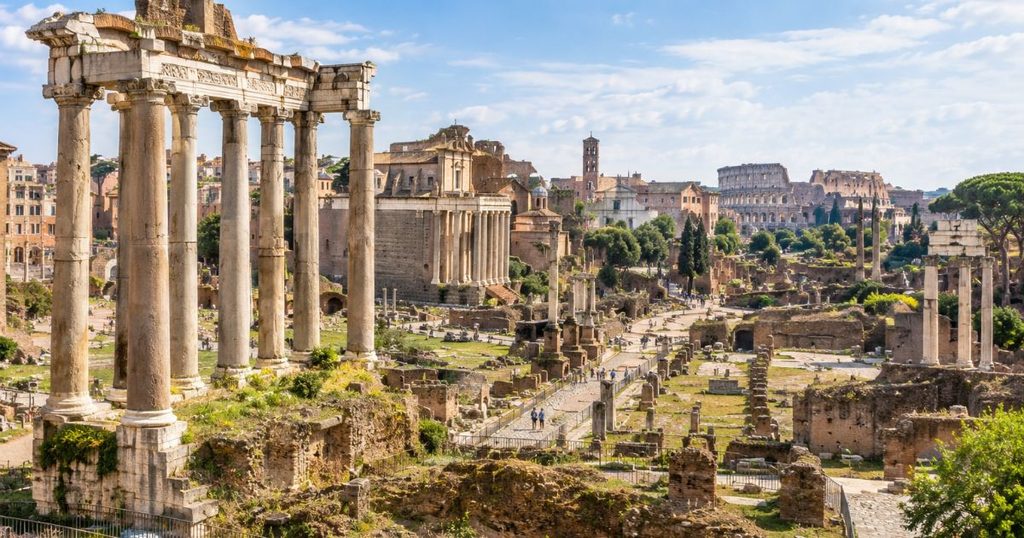
A visit to the Colosseum can become a richer historical experience when you explore the nearby Roman Forum and Palatine Hill. These archaeological areas reveal different aspects of ancient Roman life, from public ceremonies and political activity to imperial residences and monumental architecture. This Colosseum travel guide recommends considering all three sites when planning your day, especially if your ticket includes access to the surrounding archaeological areas.
Roman Forum
The Roman Forum was a central area of public life in ancient Rome. It contained important religious buildings, civic spaces, monuments, and gathering places. Today, its ruins provide a glimpse into the political, commercial, and ceremonial activities that shaped Roman society.
Walk among the remains of ancient temples and public buildings, and take time to understand the role this area played in the development of Rome.
Palatine Hill
Palatine Hill is closely associated with Rome’s early history and the development of imperial residences. The hill contains archaeological remains and viewpoints overlooking parts of the Roman Forum and the surrounding city. Its elevated setting also offers a different perspective on the scale of ancient Rome.
The terrain includes slopes and uneven surfaces, so wear comfortable shoes and allow enough time for exploring.
How Much Time Should You Allow?
For the Colosseum alone, many visitors allow around one to two hours, depending on their ticket and interests. If you also want to explore the Roman Forum and Palatine Hill, set aside at least half a day. History enthusiasts may want longer, particularly if they plan to read information panels, join a tour, or stop for photographs.
Practical Colosseum Visiting Tips for First-Time Travelers
A little preparation can make a substantial difference to your experience. The monument has timed entry, security procedures, uneven walking surfaces, and areas exposed to the weather. These practical recommendations from this Colosseum travel guide can help you spend more time enjoying the site and less time dealing with avoidable problems.
What Should You Bring?
- Your ticket and required identification: Keep them accessible and make sure your details meet the entry requirements.
- Comfortable walking shoes: The archaeological area involves considerable walking and uneven surfaces.
- Sun protection: A hat and sunscreen are useful in warm, sunny weather.
- Water: Stay hydrated, particularly during summer, while following current site rules.
- A charged phone: Keep your digital ticket, booking confirmation, and map available.
- A lightweight bag: Check current security restrictions before bringing backpacks or other belongings.
Common Mistakes to Avoid
| Common mistake | Better approach |
| Waiting until arrival to look for tickets | Check official availability before your travel date |
| Assuming every ticket includes underground access | Read the complete ticket description |
| Entering the wrong queue | Follow the entrance and arrival instructions on your ticket |
| Underestimating the walking distance | Allow enough time for all planned archaeological areas |
| Visiting in hot weather without preparation | Carry sun protection and plan breaks |
| Booking another timed attraction too soon afterward | Leave a buffer for security checks and unexpected delays |
| Ignoring accessibility requirements | Check official route and visitor-service information |
Is the Colosseum Accessible for Visitors with Mobility Needs?
Parts of the Colosseum and archaeological park offer accessibility services, including designated routes and lifts. However, accessibility differs between areas, and not every route or special experience is suitable for every visitor.
If you need step-free access or assistance, review the latest official accessibility and visitor-services information before booking. Contact the park if you need clarification about a particular ticket or route.
Is There a Dress Code?
There is no general religious dress code for the Colosseum itself because it is an archaeological monument rather than an active place of worship. Comfortable clothing and walking shoes are sensible choices. If you plan to visit churches or religious sites elsewhere in Rome, check their individual clothing requirements.
Where to Stay Near the Colosseum in Rome
Staying near the Colosseum can be convenient if you want to reach the archaeological area early or explore the historic center on foot. However, accommodation prices, noise levels, transport connections, and neighborhood atmosphere vary. Use this Colosseum travel guide to compare locations according to your budget, sightseeing plans, and preferred travel style rather than choosing accommodation based on distance alone.
| Area | Why consider it? | Best for |
| Colosseo and Monti | Close to the monument, with restaurants and historic streets | Visitors prioritizing central sightseeing |
| Centro Storico | Access to many famous landmarks and walkable streets | First-time visitors seeking a broad Rome experience |
| Termini area | Useful rail and public transport connections | Travelers prioritizing transport and budget options |
| Prati | Convenient for Vatican-area sightseeing and metro connections | Visitors planning to explore Vatican City |
Before reserving a hotel, compare the total price, cancellation conditions, transport access, and recent guest reviews. Staying close to the monument is not essential if your accommodation has reliable public transport connections.
FAQs
Where Is the Colosseum Located?
The Colosseum is in Rome, the capital of Italy, at Piazza del Colosseo in the city’s central archaeological district. It is close to the Roman Forum and Palatine Hill and can be reached by Metro Line B, bus, Tram Line 3, taxi, or on foot from nearby neighborhoods.
How Old Is the Colosseum?
The Colosseum dates to the first century AD and is nearly 2,000 years old. Construction began under Emperor Vespasian around AD 70–72, and Emperor Titus inaugurated the amphitheater around AD 80. Further additions were made under Domitian.
How Much Do Colosseum Tickets Cost?
The official standard ticket for the Colosseum, Roman Forum, and Palatine Hill has been listed at €18 for full-price entry on the ticket information consulted for this article. Eligible visitors may qualify for reduced or free admission under applicable rules. Prices and ticket options can change, so verify the current rates before booking.
What Are the Colosseum’s Opening Hours?
Opening hours vary by season. The published schedule lists an 8:30 a.m. opening, with closing times changing according to the date. For example, the schedule lists a 6:30 p.m. closing time from October 1–24, 2026, and a 4:30 p.m. closing time from October 25, 2026, through February 28, 2027. Check the official calendar for your visit date.
How Long Should You Spend at the Colosseum?
Many visitors spend around one to two hours inside the monument, depending on their ticket and interest in history. If you plan to visit the Roman Forum and Palatine Hill as well, allow at least half a day to explore without rushing.
Can You Visit the Colosseum Underground?
Yes. Underground access is available through certain ticketed experiences, subject to availability and current access rules. It is not included with every standard admission ticket. Check the official ticket description to confirm whether the underground chambers and a guided tour are included.
Is the Colosseum Worth Visiting?
Yes, especially if you are interested in ancient history, architecture, or cultural travel. The monument offers a close look at Roman engineering and public life, while its nearby archaeological sites provide a broader understanding of the ancient city.
What Should You Wear to the Colosseum?
Wear comfortable walking shoes and weather-appropriate clothing. Summer visitors should prepare for sun and heat, while winter visitors may need a jacket or rain protection. Check current visitor rules before arriving.
What Is the Best Way to Buy Colosseum Tickets?
The official ticketing portal is the best starting point for checking current prices, entry times, and available experiences. Tickets require a reserved entry time, and official sales generally open 30 days before the visit date. If you choose a third-party tour, check what is included and whether the operator provides confirmed admission.
Can You Visit the Colosseum and Roman Forum on the Same Day?
Yes. Many tickets cover the Colosseum, Roman Forum, and Palatine Hill, subject to the specific ticket conditions. Exploring all three in one day is possible, but allow sufficient time for walking, security, and breaks.
Conclusion
The Colosseum is one of Italy’s most remarkable historical attractions, offering a fascinating connection to the architecture, engineering, and public life of ancient Rome. From the surviving outer walls and spectator levels to the arena and underground chambers, the monument gives visitors an opportunity to understand how an ancient amphitheater operated and how its role changed over the centuries. This Colosseum travel guide helps you explore the landmark’s history while making informed decisions about tickets, timing, and nearby archaeological sites.
Use this Colosseum travel guide to plan your tickets, choose a suitable visiting time, arrange transportation, and decide which areas you want to explore. Before departure, verify opening hours, ticket prices, and special-access availability through the official archaeological park website. With a well-planned itinerary and realistic expectations, you can enjoy a rewarding visit to one of Rome’s most enduring landmarks and make your time in Italy more memorable.
Read More:
Bali Travel Guide 2026–27: Best Places, Costs & 7-Day Itinerary
Paris Travel Guide: Explore Iconic Landmarks, Hidden Gems & Local Experience

